Zhang returned to China in 1994 after studying at the University of Oxford with James Mirrlees, an economist who won the Nobel Prize in economics in 1996. He joined the Center for Economic Research established by Justin Yifu Lin at Peking University, and in 1998 he was invited by Li Yining, then dean of the Guanghua School of Management, to become deputy dean.
Zhang stayed at Guanghua until 2010, becoming dean in 2006 and leading the school to its high position among the business schools of Asia. In 2011, it was the first Chinese business school to appear in the global rankings published each year by the Financial Times.
When Zhang stepped down as dean he returned to research. In 2012, his book, The Logic of the Market, a collection of his writings about the free market, was published in Beijing. The English edition appeared last year.
Edmund Phelps and Thomas Sargent, both Nobel Prize winners in economics, reviewed his work. "This remarkable book testifies to the power of economic analysis to isolate basic economic forces that transcend countries and political regimes," said Sargent.
The Logic of the Market shows how much Zhang was influenced by Adam Smith in his early thinking as an undergraduate student in economics at Northwestern University in Xi'an. Zhang writes: "Reading The Wealth of Nations by Adam Smith in 1982 started to build my belief in the free market for the first time."
He went on to write two papers in 1983 and 1984, one about the dual-track pricing system later adopted in the first stage of China's economic reform. The introduction of market forces into Chinese agricultural prices in the 1980s showed how Smith's "invisible hand" could raise output and productivity.
As Zhang's thinking developed, he became more convinced that only by introducing market forces could China meet its growth challenges. He wrote: "Under the planned economy, we did not pursue happiness by making others happy. Instead, we pursued happiness by making others unhappy. Our energies were spent fighting for power and gain. We were competing ... but we were not creating value. Under the market economy, rights are defined by property.
"With individual property, as long as people have money, they can also enjoy the majority of services that only people with power could enjoy before. ... The country's future depends on what we believe in and what we do not believe in. From the 1950s to 30 years ago, we believed in the planned economy. The result was a tremendous disaster. ... Only if we move toward the logic of the market will China's future be bright."
As China moves to the next stage of its development, its policymakers and officials need to think clearly about the economic models they should be using. In the fierce debates that take place among different schools of thought, it is fortunate for them, and for China, that they have Zhang, to whom they can turn for inspiration.
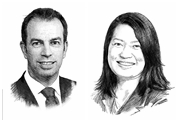
The author is a visiting professor at Guanghua School of Management, Peking University. The views do not necessarily reflect those of China Daily.

Copyright 1995 - . All rights reserved. The content (including but not limited to text, photo, multimedia information, etc) published in this site belongs to China Daily Information Co (CDIC). Without written authorization from CDIC, such content shall not be republished or used in any form. Note: Browsers with 1024*768 or higher resolution are suggested for this site.
License for publishing multimedia online 0108263 Registration Number: 130349