SHANGHAI/GUANGZHOU - When Shanghai INESA held its first technology meeting in 2010, a board erected at the door of the meeting room had almost nothing to display as there were no "decent" quality products at that time.
But things became different when the instruments and electronics products manufacturer held its second technology meeting two years later.
"We not only had new products, but also a whole set of solutions," said Wang Qiang, chairman of the State-owned enterprise (SOE) in East China's business hub Shanghai.
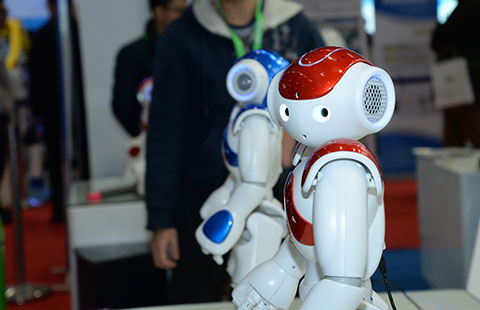
The company, founded in 1960, is shifting from traditional electronics production to new industries such as smart city construction and the Internet of Things.
At the end of 2015, after INESA acquired some private firms, its mixed-ownership subsidiaries accounted for 37.3 percent of assets and 56.4 percent of profits.
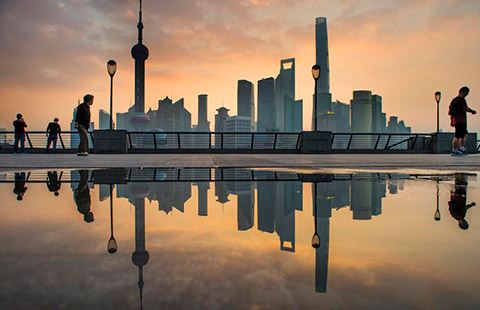
These changes reflect the substantial reforms in local SOEs in recent years in Shanghai, a city which has long taken the lead in such reforms, in policies, programs and practice.
SOE reforms play a vital role in the country's economic restructuring. Local SOEs account for about 47 percent of all the country's SOE assets, according to statistics released by the Finance Ministry last month.
In the first half of 2016, the total revenue and profit of local SOEs in Shanghai reached 1.4 trillion yuan ($213 billion) and 149 billion yuan respectively, both growing faster than the national average, according to official statistics.
Progress has also been made with other SOE reforms to boost innovation in Shanghai.
At Shanghai International Port Group, 16,000 employees (about 72 percent of staff) hold a total of 410 million shares (1.8 percent of the company).
"The staff used to care more about their own salaries than company profits. Now they pay more attention to the corporate operation and management," said Yan Jun, president of the State-owned enterprise.
Shanghai SOE reforms and performance have attracted investors. Late last month, an asset management company raised 15 billion yuan for an exchange-traded fund tracking an index of Shanghai SOEs, the first of its kind in Shanghai.
Shanghai will continue to make breakthroughs in capital management and accelerate the orderly flow of State-owned capital, said Jin Xingming, director of the Shanghai State-owned Assets Supervision and Administration Commission.
Home to China's first free trade zone, Shanghai saw 6.7 percent growth in H1, the same as the national rate, according to official statistics.
Indicative of its restructuring progress, the tertiary sector accounted for more than 70 percent of the Shanghai's gross domestic product for the first time. Financial, information, and creative industries all showed double-digit growth.
"Innovation-driven development has brought more positive impact to Shanghai's economy," said Shen Xiaochu, head of the Shanghai Development and Reform Commission.
Robust private investment boosts upgrade
Restructuring has also taken place in other parts of the country. South China's Guangdong province, the country's main manufacturing hub, is demonstrating a healthier development pattern with strong private investment.
Guangdong's private investment during H1 saw 19.6 percent growth year on year, well ahead of the 2.8 percent recorded across the country. Private investment contributed to 90 percent of the total growth of investment in Guangdong over the same period..
Private investment can sensitively reflect the market environment. The rapid growth implies that the market is offering new opportunities, said Chen Hongyu, deputy head of the Guangdong economic society.
Statistics show that nearly 70 percent of private investment went into manufacturing and the tertiary industry.
Early restructuring moves have brought new energy to Guangdong's economy, with high-end manufacturing and Internet-related services growing as favored sectors for investment.
During the first half of the year, high-end manufacturing in the province registered 10 percent growth year on year. The Internet-related service sector saw a 43 percent annual growth in revenue.
Guangdong Incode Automation is a company focusing on the research and production of encoders used in industrial robotics. These days deputy general manager Luo Rihui has been busy listening to venture capital organizations from around the world.
"As long as we have the core technology, capital will automatically come to us," he said.
Guangdong-based appliance giant Midea launched a smart electric cooker last year, which sold at 3,000 yuan per set, about ten times the price of the old model.
Company chairman Fang Hongbo said, the new product has sold much better than the old one, which has highlighted the importance of quality-driven growth.
Ding Li, expert with the Guangdong Academy of Social Sciences, said that some traditional industries such as home appliances, textiles, furniture and porcelain in the province are embracing new technology and a business model for new development at a time when the economy is facing downward pressure.


Copyright 1995 - . All rights reserved. The content (including but not limited to text, photo, multimedia information, etc) published in this site belongs to China Daily Information Co (CDIC). Without written authorization from CDIC, such content shall not be republished or used in any form. Note: Browsers with 1024*768 or higher resolution are suggested for this site.
License for publishing multimedia online 0108263 Registration Number: 130349