 |
|
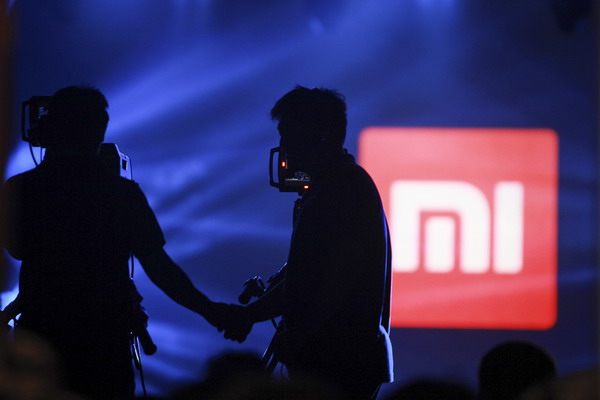
Cameramen focus on Xiaomi's new tablet at the device's unveiling on May 15, 2014 in Beijing. [Photo provided to China Daily] |
Xiaomi, one of China's hottest companies, is bringing its blend of cheap yet fashionable technology and crowd-pleasing antics to the US.
Although its smartphones won't be available in San Francisco anytime soon, Xiaomi unveiled plans Thursday to test the US market by selling inexpensive headphones and other accessories online. It plans to hew to the Internet-driven, customer-friendly model that has helped turn the company into a major player in mobile computing just five years after its founding.
Xiaomi, pronounced schow-mee, has made a name in China by selling sleek gadgets at relatively low prices, using online sales and social media to keep marketing and distribution costs low. Some analysts have hailed the company as the Chinese equivalent of Apple, in part because of its intensely loyal fans.
There are some significant differences between the two companies' approach, though. While Apple tends to keep its future product plans secret, Xiaomi has invited customers to nosh on popcorn at company parties, chat on Xiaomi's online forums and review or make suggestions for new features, which Xiaomi frequently builds into its weekly software updates.
"We don't have customers or users. They prefer to be addressed?as fans," said Hugo Barra, who defected from his job overseeing Google's Android products in 2013 to help plot Xiaomi's expansion outside China.
Barra was joined Thursday by?Lin Bin, Xiaomi's co-founder and president, at the company's first major press event in the United States.
In an interview with The Associated Press, Barra described the US website as "an experimental launch" that will help the company raise awareness in the US, which in turn would help its profile in other countries. He said the company also is hoping to get the kind of feedback and ideas from US consumers that the company gathers in China.
Xiaomi has emerged as a mobile-computing sensation with a line of smartphones sold in China, India and six other countries where much of the population still lacks Internet access. The company plans to expand into Brazil later this year. The phones offer a smattering of the sleek technology featured in fancier devices made by Apple and Samsung, but they sell at much lower prices, ranging from about $95 to $280. In comparison, an iPhone 6 starts at $650 without subsidies for signing two-year contracts.
A Xiaomi phone "may not be the best product out there but a product with the best combination: a very affordable price and good quality," said Teng Bingsheng, a corporate strategy expert at the Cheung Kong Graduate School of Business in Beijing.
While the iPhone still dominates the smaller luxury segment of China's market, Xiaomi's devices are being snapped up by the masses almost as quickly as the company starts accepting online orders. Xiaomi sold about 61 million phones last year, more than tripling its 2013 volume, Lin said. That established Xiaomi as China's top seller of smartphones with a 15 percent market share to edge out Samsung at 14 percent, according to research firm IHS. But another firm, Canalys, estimates that Apple sold more phones in China than either of those companies in the fourth quarter of 2014, when Apple's new iPhone 6 models came out.
By concentrating on online sales of phones and accessories, Lin said, the company has built the third-largest e-commerce site in China. Besides phones, Xiaomi has an electronics lineup that ranges from a 49-inch flat-panel TV for $550 to a fitness band for about $13. The company also has sold about 2 million stuffed bunnies that serve as Xiaomi's mascot.
Xiaomi is just dipping its toes in the US market by selling accessories for now, including headphones for about $80. Barra said it takes "an incredible amount of work" to bring more technologically complicated products, such as a smartphone, to a new market. He didn't say when that might happen.
But executives acknowledged the company would face big hurdles in the US, where most consumers buy smartphones from wireless carriers at subsidized prices. That could make Xiaomi's low-margin business model less effective here.
In addition, Xiaomi has been accused of copying-or at least closely imitating-some designs from Apple or other companies. At the San Francisco event Thursday, executives stressed an array of software and features that Xiaomi has developed to run on top of the Android system that Google makes available for other device makers. They range from games and messaging features to services that let users search for a nearby doctor and make an appointment on their phones.
When asked whether a fear of patent lawsuits could deter Xiaomi from selling phones in the United States, Lin implied that it's not a big factor for the company. But he said, "all companies have had patent litigation." He said Xiaomi has filed for hundreds of patents in part to beef up its own defenses against such claims.
Xiaomi raised $1.1 billion late last year in an investment that valued the privately held company at $45 billion. The company's eight founders include CEO?Lei Jun, one of China's best-known technology entrepreneurs; Lin Bin, a former engineer at Microsoft and Google; and former Motorola executive Zhou Guangping.

Copyright 1995 - . All rights reserved. The content (including but not limited to text, photo, multimedia information, etc) published in this site belongs to China Daily Information Co (CDIC). Without written authorization from CDIC, such content shall not be republished or used in any form. Note: Browsers with 1024*768 or higher resolution are suggested for this site.
License for publishing multimedia online 0108263 Registration Number: 130349