Traditional brands need updating
By Xiao Mingchao and Ran Wei (China Daily)Updated: 2007-04-26 10:10
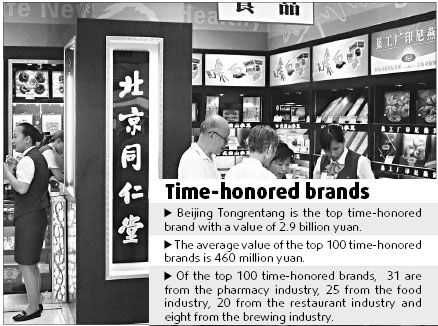 Traditional Chinese brands have some growing up to do.
A recent survey by Shengshi Indexes in 12 major cities found consumer awareness of traditional Chinese brands was poor at best. Customers could identify an average of just 70 traditional brands from 30 different sectors, compared with 434 brands recognized by the Ministry of Commerce last October.
This is partly due to a lack of competitiveness against emerging domestic and foreign rivals. But traditional brands also lack effective branding communication techniques.
In other words, the old word-of-mouth channel no longer cuts it.
This has left many traditional Chinese brands struggling to survive. According to 2005 statistics from the China General Chamber of Commerce, 70 percent of those brands were barely able to maintain operations, while another 20 percent were facing bankruptcy. That left just 10 percent making a profit.
Traditional Chinese brands need to learn from their contemporary counterparts and begin aggressive advertising, marketing and public relations campaigns to promote their products.
They also need to break geographic chains. Too often, brands popular in North China are barely known in the south, and vice versa. The survey indicates that brands from Beijing and Shanghai have the highest awareness throughout the country, leaving brands from other regions at a disadvantage.
Some companies have already moved beyond their geographic constraints. Wanglaoji Herbal Tea, for example, once focused exclusively on Guangdong Province and the Guangxi Zhuang Autonomous Region. After a series of re-branding efforts, the company successfully targeted a national audience.
Some brands are eyeing an audience beyond China's borders. Drug brand Tongrentang, for example, opened its own shops overseas after gaining foreign trade rights in 1993. So far it has 22 outlets in 14 countries and regions, promoting traditional Chinese medicine worldwide.
Laofengxiang, a Shanghai-based jewelry company, is also seeking expansion outside China.
Innovation can also help raise brand awareness. Customers are used to cutting- edge marketing techniques, and traditional brands can no longer remain complacent.
The key for the future success of traditional Chinese brands, however, is culture marketing. A rich history, after all, is their most valuable form of capital.
Take Peking duck brand Quanjude, which shot the television opera, The No 1 Restaurant in China. The program presented the brand's story and history to customers, broadening the company's appeal to a larger audience.
The upcoming Olympic Games is a golden opportunity for traditional Chinese brands to reach out to overseas customers. Companies will be rewarded if they can connect their brand with the Olympic spirit.
There is an old Chinese saying: Good wine sells well even in an outlying lane. The saying is no longer valid in today's world. Speaking out loudly and frequently is a must for traditional Chinese brands.
The authors are researchers from Shengshi Indexes, a leading domestic market research firm
(China Daily 04/26/2007 page15)
(For more biz stories, please visit Industry Updates)