BIZCHINA> Biz Life

|
BIZCHINA> Biz Life
|
|
Related
Beijingers debate car restrictions
(China Daily/Xinhua)
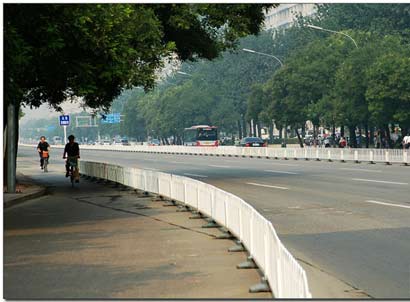
Updated: 2008-09-01 10:16 More than 400,000 Beijingers have joined an online discussion about whether to keep traffic restrictions introduced for the Olympic and Paralympic Games. Nearly half of those taking part wanted to see the restrictions - an alternating odd-even license plate system - become a permanent fixture. Unsurprisingly, motorists account for most opponents of the measure that has been in force since July 20.
"I support long-term car restrictions. We have made some mistakes in the past. Now we should correct them and return blue skies to our children," wrote He Luzhu on a forum on www.ynet.com, the website of Beijing Youth Daily. Air pollution and traffic jams emerged as key problems in 2001 for Beijing's bid to host the Games, said Sun Daguang, who was once vice-secretary of Beijing 2008 Olympic Games Bid Committee. Highlights of the city's seven-year effort to cut pollution were the relocation of giant steel company Shougang and the traffic measures that have kept around 2 million vehicles off the road. Taxis, buses and other public-service vehicles are exempt from the restrictions. "The sky was blue during the Olympics. It's so much better than those foggy days," said a repair worker surnamed He. But people who opposed a long-term car ban argued it was a sticking-plaster solution. "Only after the government makes great progress in improving public transportation should we discuss whether to keep the restrictions. I love blue skies very much. But I had to drive a car because I could not stand being packed in a bus for six hours a day," said an anonymous netizen. Official statistics showed the city's roads were extending at an annual rate of 3 percent while the number of vehicles was increasing at about 15 percent per year. "When cars run at low speeds in traffic jams, they emit many more pollutants and usually consume more fuel," said Hao Jiming, a member of the Chinese Academy of Engineering. Many people who had initially expressed annoyance over the restrictions are now unwilling to return to days of choking smog and rush-hour congestion when the restrictions end after the Paralympics. Beijing's traffic authority said it has received many submissions from car owners comfortable with the restrictions and hoping they will continue. The city will continue to improve its public transport service by expanding transport networks while keeping fares low after the Olympics, said Zhou Zhengyu, deputy director of the Beijing municipal committee of communications. "We aim to create a more convenient and comfortable environment for people traveling in the city," he said. The car ban might be a cure for congestions but not necessarily the best one, said Yang Kaizhong, an economist from Peking University. He argued there were a variety of methods, such as congestion charges and raising parking fees that have proved effective in some foreign countries. (For more biz stories, please visit Industries)
|
主站蜘蛛池模板: 安溪县| 威远县| 岗巴县| 深州市| 岳池县| 四会市| 德阳市| 奈曼旗| 香港 | 朝阳区| 通化县| 谢通门县| 贵溪市| 乃东县| 博客| 柏乡县| 淮安市| 清水河县| 益阳市| 江安县| 龙门县| 邢台市| 梁山县| 休宁县| 河津市| 子长县| 盐源县| 五莲县| 封开县| 化德县| 武汉市| 开封县| 慈溪市| 盱眙县| 务川| 碌曲县| 观塘区| 富蕴县| 芦溪县| 安国市| 临颍县| 依安县| 临武县| 黔西| 平顺县| 开封市| 安阳县| 新津县| 磴口县| 容城县| 开江县| 桂平市| 平舆县| 肇州县| 榆林市| 全州县| 泰安市| 高尔夫| 余庆县| 安庆市| 建水县| 惠安县| 东乡县| 镶黄旗| 尉氏县| 张家港市| 恩施市| 元谋县| 潼关县| 阳曲县| 五大连池市| 宜兰县| 揭西县| 托克托县| 旅游| 仙游县| 西昌市| 河津市| 容城县| 鄂托克前旗| 育儿| 白朗县|