BIZCHINA> Top Biz News

|
BIZCHINA> Top Biz News
|
|
Wildlife on menu spurs smuggling
By Wang Zhuoqiong (China Daily)
Updated: 2009-06-24 07:51 A rising appetite for wildlife and its increasing use in traditional Chinese medicine (TCM) are fueling an increase in the illegal imports of endangered animals, a senior official has said. "Illegal wildlife trade used to be outbound, but domestic demand has reversed the trend," Wan Ziming, director of enforcement and training at the endangered species' office of the State Forestry Administration, told China Daily. Wild animals are mostly smuggled in at the southwestern border and coastal regions, according to figures by Customs and major border points. Because the trade is illegal, the number of smuggling cases uncovered does not reflect the full extent of the animals and plants being brought into the country, Wan said.
"Illegal wildlife trade is alive and dynamic," said Xu Hongfa, director of the World Wildlife Fund's (WWF) TRAFFIC East Asia China Program.
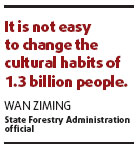
"We have noticed an increasing amount of trade and consumption in wildlife, including bear paws, tortoises, pangolins and monitor lizards," he said. The smuggling has severely impacted the wildlife populations in neighboring countries, particularly Southeast Asian nations, Wan said. He said the demand stems partly from a "resource dilemma" faced by the country - rich in variety, but scarce in amount "The demand comes from a traditional culture of using wildlife for food and medicine," he said. "It is not easy to change the cultural habits of 1.3 billion people." Chinese people have long believed in the medicinal and health benefits of wild plants and animals.
Eating wild animals is also a traditional practice in southern China. The consumption of wild animals, which slowed amid the SARS epidemic in 2003, has once again gained popularity, a WWF survey has found. Profit from illegal trade can be up to 10 times the cost, with restaurant operators offering the exotic dishes usually aware of the violation but lured by the gains, Xu said. Illegal trade in tiger meat and bones is also alive, continuing to threaten the extinction of an already depleted species, he said. Alarmingly, Xu said, more wealthy people are demanding elephant ivory for decorative purposes. Of the 87 wildlife cases uncovered by the Customs last year, more than half involved ivory, Wan said. "The profit margin is as high as in drug trafficking but the punishment is too mild," he said. He Yong from the International Fund for Animal Welfare China said the demand for wildlife springs from weak links in law enforcement - the use and trade of wild animal products is banned, but artificial breeding is allowed in many instances to fulfill the needs of customers.
 (For more biz stories, please visit Industries)
|
主站蜘蛛池模板: 西林县| 佛冈县| 乐陵市| 临洮县| 奉贤区| 竹山县| 阿克苏市| 达拉特旗| 南京市| 右玉县| 江达县| 旬邑县| 五大连池市| 上犹县| 邵东县| 彰化县| 资溪县| 涟源市| 湖南省| 商河县| 平乡县| 普宁市| 文水县| 陇西县| 九寨沟县| 靖西县| 吴忠市| 丰城市| 神木县| 木里| 封丘县| 桂平市| 聊城市| 郎溪县| 灵石县| 宾川县| 陆良县| 红安县| 石嘴山市| 陇南市| 延寿县| 新竹市| 桐城市| 容城县| 大田县| 会宁县| 乐安县| 蒙自县| 福贡县| 常德市| 宝丰县| 建阳市| 和田市| 忻城县| 建德市| 革吉县| 辽宁省| 静海县| 泸州市| 金昌市| 太保市| 马尔康县| 伊宁市| 龙陵县| 湟源县| 云南省| 嘉荫县| 班戈县| 托里县| 兰坪| 阿合奇县| 鲜城| 鹤庆县| 丹阳市| 岳阳市| 酉阳| 定襄县| 多伦县| 商都县| 屏南县| 吉安市| 周口市|