Can deliverymen keep pace with e-commerce boom?
Updated: 2012-02-03 15:53
(Xinhua)
|
|||||||||


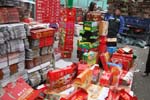
BEIJING - After unloading piles of packages from a van and stuffing them into a backpack, deliveryman Dong Zhongting starts his electric bike and zooms away from a delivery terminal in the early morning. This is the aftermath of his peak Spring Festival rush, but the number of parcels needing to reach their destination still remains high.
The 24 year old, who grew up in eastern Shandong province, came to Beijing in 2010 and joined the delivery team of ZTO Express, one of China's major logistics firms.
The young man might not be aware that China has 194 million online buyers and counting, but he does have a distinct feeling that his workload in on the rise. Deliverymen like him are struggling to keep pace with China's e-commerce boom.
The country's online shopping market was worth 773.56 billion yuan ($122.72 billion) in 2011, up 67.8 percent from 2010, and the number is predicted to reach 1.184 trillion yuan in 2012, according to a new report by analysts iResearch.
"The average number of my daily deliveries is 150, but it was 60 at most two years ago," Dong says, adding that it is very common for him to work until midnight when festivals and holidays come around.
Promotions run by major online retailers trigger a nightmare for Dong, especially around the Spring Festival, the most important time for gift-giving in China.
His delivery terminal, set up in 2009 with only two men delivering about 20 packages daily, has recruited dozens of staff to handle more than 1,000 packages every day. He attributes the rapid expansion of his company to the increasing popularity of online shopping.
"Seventy percent of my daily deliveries are goods people buy online. Once online retailers give discounts, we'll get terribly busy. Sometimes, my boss has to run deliveries too," he says.
The growth of China's logistics industry, whose door has been gradually opened to private enterprises after the country's entry into the World Trade Organization in 2001, goes hand in hand with thriving e-commerce.
On Nov 11, 2011, a day that marked Chinese online shopping history, market giant Taobao and its business-to-customer (B2C) platform Tmall generated gross sales of 5.2 billion yuan, six times the total daily retailing volume of Hong Kong.
China's online retail market began in 1999. Eachnet launched in August that year, introducing the eBay-like customer-to-customer model to China. Dangdang, an Amazon-like site, began selling books online in November of that year.
After Alibaba opened Taobao in 2003, a new round of booming e-commerce kicked off. Jingdong, now the second-biggest online retailer, dove into e-commerce in 2004, while Dangdang started its second round of funding in the same year. In 2008, Taobao started Tmall, which has grown to hold the biggest share of the B2C market in China.
This all poses great challenges to the current logistics set-up. Each Chinese ordered an average of two items for express delivery in 2010, half the global average of 4.1 and far behind the 26 items ordered by each American, according to figures from the State Post Bureau of China.
It indicates the way the trend is likely to develop, and soaring online orders already often overwhelm the delivery infrastructure, especially during holidays and other shopping seasons. Many Taobao retailers even posted notices warning "No delivery during the holiday" on their websites more than 10 days before the Spring Festival. They were worried customers would complain of slow delivery because deliverymen taking days off for the holiday would cause personnel shortages in the agencies they use.
Some online retailers have begun to build their own logistics systems in order to solve the delivery difficulties. Jingdong initiated its system in 2009 and has recruited more than 6,000 people running deliveries in about 180 cities across the country. Early last year, Alibaba also announced with much fanfare its ambition to set up a delivery team.
Jingdong CEO Liu Qiangdong maintains that a lack of good delivery services means a lack of good shopping experiences for customers.
"Logistics is vital to the development of e-commerce, and will play a key role in future competition among online retailers," says Mo Daiqing, an analyst with China e-Commerce Research Center.
After delivering all the packages in his backpack, Dong returns to the delivery terminal at dusk. With no time for supper, the young man hurries to scan the goods he received from Taobao retailers.
"I'm going to run deliveries for another few years to make some money and then open my own delivery terminal," he says. He's sure to remain in high demand.