BEIJING - While the Chinese public are expecting government reform to break a perceived monopoly in the electricity sector, reports of privately owned power plants offering lower charges to local users have heated debate on China's public-private split in utilities management.
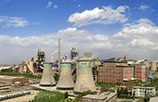
Weiqiao Pioneering Group, a conglomerate in east China's Shandong province that holds various interests ranging from garment production to electricity, has become the center of discussion after it was found to be transferring and selling its self-generated electricity to nearby factories and households at prices over 30 percent lower than those offered by the country's national grid.
Though widely welcomed by the public, doubts have been raised over the validity of the practice as, although China allows private capital in electricity generation, the following stages of transmission, distribution and sale of electricity remain under firm government control.
"According to current regulations, private power plants constructed by local enterprises should be confined to self-use. Additional power should be sold to the state grid for distribution," according to Yang Zonglin, a senior engineer with the East China Grid Company.
Critics have also pointed to risks in transmission safety and environmental concerns.
But to Chinese consumers who have long grumbled about a monopoly that grants state-controlled power companies unrestrained rights to set prices, the message is simple and clear: with more competition allowed, costs and prices can be brought down.
"Aren't state-owned power companies always complaining about losses? Why is the price offered by Weiqiao is so low then?" read an entry posted on Sina.com, the popular Chinese microblogging site.
However, Lin Boqiang, director of Xiamen University's China Center for Energy Economics Research, rejected such simple logic, saying it is not rational to compare the prices.
"Of course the self-generated electricity will be cheaper, because the enterprises do not have to bear social responsibilities for additional government funds," he said, referring to the fees that are included in the government-set electricity prices for the purpose of funding public projects such as water conservation.
These charges account for roughly 7.2 percent of the price, according to China Business News.
But instead of pure price considerations, what has really bothered Chinese consumers concerning electricity as well as the similar oil pricing mechanism is a lack of transparency on the part of state-linked firms.
For example, China's power companies only make public the on-grid price and the final selling price, leaving the majority of people in the dark about transmission and distribution costs. This has triggered doubts over their profit margins, though the companies have constantly blamed financial pressures on the widening gap between the government-set electricity price and the market-oriented coal price.
Even the destination of those fees collected for government funds, a hefty sum accumulated over the years, has remained elusive to the public.
The China Business News estimated the public fees in the area totalled 280 billion yuan ($44.4 billion) last year.
"What is important is whether the additional fees had been used for the intended purposes," read another Weibo post.
Between State-owned companies' financial crunch and public discontent over prices, Lin said the key solution lies in making information available to let the public know the costs of supplying electricity and see whether they had benefitted or suffered in the government-set prices.
In addition to stressing this need for transparency, the energy academic said China should encourage private investment in the reform of the pricing mechanism and carry out pilot schemes in key areas first.
"Under the same requirements of social and environmental responsibilities, let's see whether private enterprises can create more values," Lin suggested.

Copyright 1995 - . All rights reserved. The content (including but not limited to text, photo, multimedia information, etc) published in this site belongs to China Daily Information Co (CDIC). Without written authorization from CDIC, such content shall not be republished or used in any form. Note: Browsers with 1024*768 or higher resolution are suggested for this site.
License for publishing multimedia online 0108263 Registration Number: 130349