|
|
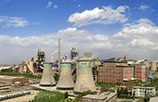
Major cities in western China, such as Chongqing, are becoming increasingly attractive as costs rise along the coastal region. The city attracted $10.8 billion in foreign direct investment last year, overtaking Beijing. [Photo / Bloomberg] |
That is good news for the entire country, a large part of which remains relatively underdeveloped. But should the eastern coastal region be worried that sharing foreign investment with the west will stall its growth?
Not necessarily, according to analysts.
First, more investment in the west doesn't necessarily mean less in the east. Foreign companies could just be investing more.
Second, even though some investment will be diverted to the west, this is chasing lower labor and land costs, which the east is no longer able to offer at its current stage of development.
For now, a larger part of foreign direct investment still goes to the east, but FDI to the west is growing at an astonishing rate.
In 2011, FDI to China as a whole stood at $116 billion. Only around $12 billion went to the west. But the west saw a growth rate of 28 percent, more than four times the rate in the east.
A report by the Economist Intelligence Unit singled out Chongqing as an example of investment moving inland in China.
In FDI terms, it went from 22nd place out of 31 provinces, autonomous regions and municipalities on the mainland in 2007, to overtaking Beijing in 2011, when the western metropolis attracted $10.8 billion in investment.
The trend is expected to continue, with the city set to overtake Tianjin and Shanghai by 2014.
"It's just natural that some industries are going to the west after labor and land prices have shot up so much in the east over the past decade. Meanwhile the market in the west is also maturing," said Sun Lijian, a professor at the School of Economics at Fudan University in Shanghai.
That is not bad news for the east, Sun added, as it can focus on industries with more added-value.
In fact, the central government has been encouraging the east-to-west industry transfer.
A document released last year said that moving labor-intensive industries to the west is an "inevitable requirement" if the nation wants to upgrade its industries.
A typical example of this transfer can be found in Shanghai. Formerly a manufacturing center, the manufacturing capacity of the city, which is aiming to become a global financial center, has been moving to the surrounding Yangtze River Delta.
As part of this trend, US firms are moving their high-end manufacturing capacity from Shanghai to the delta.
In a recent survey conducted by the American Chamber of Commerce in Shanghai, two-thirds of respondents said they imported parts or finished goods from the United States into China to support their operations in the country, where around 200 AmCham Shanghai members produce products in the Yangtze River Delta.
Companies used to regard the delta primarily as Shanghai's "backyard", but it is gradually becoming a "one-stop shop" for innovation and design, finance, manufacturing, marketing and sales, said Aaron Lo, a partner at KPMG.
According to AmCham Shanghai President Brenda Foster, there is a clear trend that more members are expanding from Shanghai to the delta region, encouraged by policy incentives, lower costs and opportunities to extend their market penetration.
"We see enlightened local governments in second-tier cities like Nanjing and Suzhou, who are very proactive in seeking investment, offering incentives, and they usually have a clear business plan as to what types of industries they want to develop," said Foster.
For example, special zones have been set up, such as Suzhou Industrial Park, with small and medium-sized enterprise centers and research facilities to attract investors.
The transfer is a natural outcome, said Foster, citing Shanghai as an example. As the city develops into a major hub for finance and services, its industries are moving to surrounding areas.
"The market in the delta is still unsaturated. A growing middle class with an increasing disposable income drives many businesses to integrate their regional sales, manufacturing functions and even R&D into the region," she said.
As this transfer gathers pace, a domino effect is being witnessed.
While many high-end manufacturers move from Shanghai to the Yangtze River Delta, their low-end colleagues are moving from the delta to the west.
For example, Samsung Electronics Co Ltd, decided last month to set up a memory chip plant in the northwestern city of Xi'an. Foxconn, a manufacturer of Apple iPhones and iPads, already has a manufacturing site in Chengdu, Sichuan province.
"It's a trend that foreign investment in low-end manufacturing goes to the central and western regions. But capital and technology-intensive industries will stay in eastern China," said Sun from Fudan University.
Contact the writers at gaochangxin@chinadaily.com.cn and hewei@chinadaily.com.cn

Copyright 1995 - . All rights reserved. The content (including but not limited to text, photo, multimedia information, etc) published in this site belongs to China Daily Information Co (CDIC). Without written authorization from CDIC, such content shall not be republished or used in any form. Note: Browsers with 1024*768 or higher resolution are suggested for this site.
License for publishing multimedia online 0108263 Registration Number: 130349