I felt spoiled during a trip to South Korea in mid-April compared to the last time I was in the peninsular nation a decade ago.
I was greeted by Chinese-speaking front desk staff at my hotel in downtown Seoul.
When I used the phone in the lobby, the auto reply was first in Korean, then in Chinese.
But maybe most surprisingly, I even found a little sign, written in Chinese, in my bathroom, telling me "Seoul tap water is safe to drink. Please turn the tap to the right and wait for a few seconds before you drink".
I have never seen such detailed instructions offered in Chinese, in any hotel abroad.
Ten years ago, I remember I could only communicate in English at the hotel I stayed in. Coincidentally the two hotels are located just across a street from each other, next to the central plaza in front of the Seoul City Hall.
The sheer volume of Chinese tourists in Seoul, however, did not surprise me at all.
It is no longer a novelty to see crowds of Chinese abroad, speaking all kinds of local dialects, at major tourist attractions.
But how Koreans now pamper Chinese tourists, by speaking our mother tongue, did grab my attention.
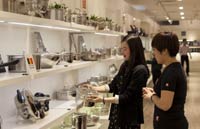
Clearly fuelling this warmth is the increasingly important role being played by Chinese travelers in the South Korean tourism industry.
China overtook Japan to become South Korea's largest source of inbound travelers in 2013. Last year more than 6.2 million Chinese visited the country, a 42 percent surge on the previous year, according to the Korea Tourism Organization.
Increasingly fascinated by Korean pop culture, and helped by the appreciation of the renminbi, Chinese tourists accounted for a resounding 44 percent of the country's total inbound travelers last year.
That number is expected to reach 10 million in five years, said Oki Kang, executive vice-president for the Tourism Industry under the KTO, at an international conference organized by the Korean Journalists' Association.
Chinese shoppers are big spenders in Seoul. They contributed 70 percent of sales, for instance, at Lotte Duty Free Shop in the capital's busy Myeongdong commercial district last year.
The travel preferences of Chinese tourists are also becoming more ambitious. Unlike group tourists, whose travel itineraries usually constitute little more than shopping and sightseeing, individual travelers are hungry for new experiences, such as skiing in winter. Dubbed "high-quality travelers" by the KTO, this kind of visitor usually stays longer, and spends more.
The bustling Korean tourism industry is the most visible part of what has become an ever-growing economic interdependence between the two countries.
China is now South Korea's biggest trading partner, and South Korea is China's fourth-largest, after the European Union, US and Japan. Trade between the two reached more than $290 billion last year, compared with $112 billion a decade ago.
Beijing and Seoul are expected to officially sign a bilateral free trade agreement in the first half of this year, and in anticipation of that, enterprises from both sides have accelerated their investment on each other's home turf.
China has also become South Korea's third-largest source of foreign investment, after the US and Japan. Chinese investment in South Korea surged 148 percent to $1.19 billion last year, while investment across the Yellow Sea in the other direction grew 29.8 percent to $3.97 billion.
The mutually beneficial relationship between China and South Korea entered this "honeymoon" period after President Xi Jinping and President Park Geun-hye fleshed out a series of strategic partnerships over the past two years.
This further development of economic ties serves both countries' pivotal interests, and is being warmly welcomed by the peoples of both countries.
In a public opinion poll carried out by Dong-A Ilbo in March, more than half of South Koreans picked China as their most important country in terms of foreign economic ties.
On security, however, the US still matters the most to South Koreans, according to the poll, which interviewed 1,000 readers.
I failed to find a similar survey about how Chinese people view South Korea, but figures from Ctrip, China's largest online travel agency, confirm that South Korea has replaced Thailand as the most popular outbound tourist destination for Chinese travelers.
More than 100,000 Chinese travelers, 20 percent more than last year, are heading to South Korea over the coming three-day Labor Day holiday, KTO said.

Copyright 1995 - . All rights reserved. The content (including but not limited to text, photo, multimedia information, etc) published in this site belongs to China Daily Information Co (CDIC). Without written authorization from CDIC, such content shall not be republished or used in any form. Note: Browsers with 1024*768 or higher resolution are suggested for this site.
License for publishing multimedia online 0108263 Registration Number: 130349