Picture a highly educated woman who can speak several languages fluently. She has lived in a handful of countries and has worked in the same profession for nearly a decade.
And then imagine her in a business meeting just sitting down while looking "pretty", because that is exactly what she has been asked to do. At this point, you might think what a waste. She is thinking that, too.
This is my story. But not only mine, because it's the story of many other working women.
As a foreigner in China, I have been asked many times by female friends how I find the situation of women professionals here compared to the countries where I worked before.
I have never really thought about the situation of female workers in China compared to the West. But it appears to be the same.
Ironically, Chinese women were told that they had an equal role in supporting the country economically. They held up half the sky.
Social policies have allowed women to be educated to the same degree as men. And all these factors have sent the rate of female labor participation to one of the highest in the world.
In fact, when I first arrived in the office here, I was happy to notice that female colleagues outnumbered males. And I took it as a positive sign and a reflection that women have a significant presence in qualified jobs. But as it always happens with gender issues, you have to scratch beneath the surface.
A recent conversation with one of my colleagues brought me back to earth with a bump.
"The reason why there are more women journalists is because men usually prefer to work in better paid sectors such as banking," she said. "In Chinese society, men still need to earn more than their partners."
A large number of Chinese men and women might not choose a career path based on personal interests but on social expectations.
In this sense, I found no difference between China and my own country. I have come across a lot of women in Spain that have opted to become nurses and kindergarten teachers because the jobs were regarded as feminine.
But sexual discrimination seems to be more socially accepted in China, and women themselves sometimes turn a blind eye to it.
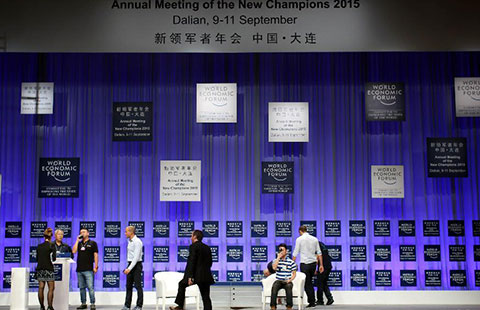
A few months ago, I was sent with a group of foreign male reporters on a business trip to a province in western China. And in all the business meetings we attended, my male colleagues were introduced by their names and job titles, while a female editor and I were just introduced by the word meinu, meaning "pretty girls".
While my other colleagues were asked about their professional background, I was just asked to drink baijiu and look pretty. Nobody even bothered to learn our names.
When I returned to Beijing, I told my female colleagues about the experience, and I was surprised by the mixed reactions.
Some seemed to perfectly understand why I was disappointed for not being treated in the same way as my male counterparts. They also confided that they had experienced similar discriminatory treatment and that it had made them feel inferior.
Yet other female colleagues thought I was just being oversensitive.
"It's a compliment," one colleague said. "You should not be so serious about it. I'm sure that when you are 40 years old and people stop saying nice things, you will become upset because they are no longer praising you."
I argued that the emphasis on beauty, and not capability, is not the kind of appreciation that working women should be looking for. Such comments only highlight that there are still barriers to break down, and that women are still being judged by their looks and not by their professional performance.
But I still wonder if they took my words seriously. For the sake of all women in the workplace here, I hope they did.

Copyright 1995 - . All rights reserved. The content (including but not limited to text, photo, multimedia information, etc) published in this site belongs to China Daily Information Co (CDIC). Without written authorization from CDIC, such content shall not be republished or used in any form. Note: Browsers with 1024*768 or higher resolution are suggested for this site.
License for publishing multimedia online 0108263 Registration Number: 130349