Growing up in Scotland, I hit my first golf balls on what we called back then a "corporation" course.
I got hooked on the game at Deaconsbank on Glasgow's southside-a club designed by the renowned course architect James Braid at the start of last century, but owned by the local council. Later as an Edinburgh student I played at Braid Hills-a spectacular venue overlooking the capital, which is still publicly funded, as are five others in the city today.
There are numerous such tax-payer owned, pay-and-play clubs within the national total of 580 registered courses. Many offer cheap lessons too. They are considered important, affordable recreational facilities, much like Victorian swimming centers.
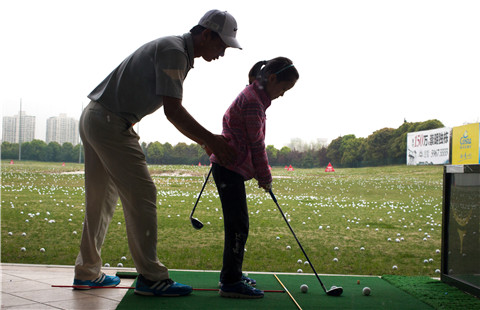
Last week I struck my first shots of this year at a golf range in the center of Beijing. That sunny lunchtime, every practice bay was busy with players of all ages.
Golf is a growing industry here, clearly in demand. One million people play regularly and that's rising 10 percent annually, according to a study by golf management firm Chaoxiang Group, which listed 639 accredited courses in the country as of last year, up from 200 a decade ago.
Earlier this month, the wee white ball's popularity was further cemented by Wu Ashun when he became the first Chinese golfer to win a European Tour title on home soil-the Volvo China Open in Shanghai.
Yet despite all this progress, the global sport which is reappearing at next year's Brazil Olympics has hit the rough recently in China.
First, it has become too expensive. A nine-hole, mid-range game could cost as much as $75, while top-end membership fees could be about $30,000. As a result, golf is considered elitist and out of reach for many.
With new courses often being built alongside multimillion yuan homes, fears of corruption have also entered the fray, and you soon understand why it is now strongly out of favor with the government.
The identity crisis first surfaced in 2004 when building new golf courses was banned due to environmental concerns-mainly the destruction of water resources-and to stop developers from building without approval.
A lack of enforcement, however, meant numbers still mushroomed in the intervening years-but officials have now reinforced their clampdown on "illegal" courses, in line with the country's anti-corruption and austerity drives.
Sixty courses have been shut since last summer. Others are likely to follow. Guilty owners have effectively been forced to bulldoze their investments and restore land to its original condition. The Western press has been branding China as at "war with golf".
But it does not have to be this way.
Scotland's state-owned golf business model is far from elitist. These courses are considered public services. They are priced to be affordable (Deaconsbank still costs just $15 a round). They do not exist for profit but are run to budget. They are carefully operated on fiercely protected land.
These valuable venues-many old and well-established-play an important social, economic role. But they could certainly make more money as private-members clubs.
Scottish golf is both a national brand and a source of valuable tourism revenue. The industry body VisitScotland expects golf to generate $455 million for the economy by the end of the decade. A delegation from Scotland was in Beijing in March for the China Golf Show to promote the country and the sport.
Golf-related businesses in China should rightly be punished for blatantly ignoring the ban. But instead of churning up completed courses, why not confiscate the best of these "illegal" sites, and rebrand them as affordable government-run facilities.
By creating its own network of "corporation" courses, affordable to the masses, China can not only nurture a burgeoning industry, but also a sport at which it can be sure of further global success.


Copyright 1995 - . All rights reserved. The content (including but not limited to text, photo, multimedia information, etc) published in this site belongs to China Daily Information Co (CDIC). Without written authorization from CDIC, such content shall not be republished or used in any form. Note: Browsers with 1024*768 or higher resolution are suggested for this site.
License for publishing multimedia online 0108263 Registration Number: 130349