


 Comments
  Print
Print  Mail
Mail  Large Medium Small

Since its enactment in 1984, China's patent law has been amended three times: first in 1992, then in 2000 and again in 2008.
The first amendment added pharmaceutical compositions to the list of patentable subject matter and inaugurated China's membership in the Patent Cooperation Treaty.
The second amendment was intended to bring the country's patent law into compliance with the Trade-Related Aspects of Intellectual Property Rights, or TRIPS, agreement.
The long-awaited third amendment to the patent law was passed by the National People's Congress on Dec 27, 2008, and became effective Oct 1. There are several significant changes to the patent law brought about by the third amendment.
Higher standards
Article 22.2 of the current patent law has a blended novelty standard for patentability. In assessing the novelty of an invention, one considers publication anywhere in the world but not public use or knowledge outside of China.
This blended novelty standard occasionally allows "patent hijacking", the patenting in China of another's invention witnessed at a public event (such as a trade show) outside of China.
The new amendment replaces this blended novelty standard with an absolute one and defines "prior art" as publicly known art anywhere in the world before the filing date.
This new novelty standard applies across the board to all three categories of patents: invention patents, utility model patents and design patents. Therefore, this new patentability standard will have a significant impact on the way in which patent validity is challenged in China.
For example, under the current law, public use outside China does not destroy novelty and is, therefore, irrelevant in invalidation proceedings.
Under the new law, it will be highly relevant, as will evidence of overseas public sales, public dissemination and public knowledge.
Moreover, the adoption of an absolute novelty standard will have the effect of reducing patent hijacking.
The amendment does not state whether and to what extent this absolute novelty requirement will be made retroactive to previously granted patents or pending applications.
Double patenting
As mentioned, China has three types of patents: invention patents, utility model patents and design patents. A Chinese invention patent is similar to a US utility patent and protects a new technical solution relating to a product, a process or an improvement thereof. An invention patent has a 20-year term
A Chinese utility model patent, on the other hand, covers a new technical solution relating to a product's shape, structure or a combination thereof. A utility model patent has a 10-year term.
Utility model patents are not substantively examined and are granted after a formal examination, which generally takes about one year to 1.5 years or less. In contrast, invention patents are substantively examined and can take three years to five years to grant.
Therefore, it is advantageous to have early issuance of a utility model patent to sue for infringement or to serve as a deterrent in addition to or in substitution for an invention patent.
It has been a widespread practice of patent applicants to obtain invention patents and utility model patents on the same inventions, even though courts have frowned upon the practice. Therefore, some double patenting has occurred in China.
This practice continued until the State Intellectual Property Office ("SIPO") amended its Patent Examination Guidelines to limit its occurrence in July 2007.
The new amendment substantially adopts the 2007 SIPO approach and stipulates that the same invention can only be granted one patent at any given time.
While the same applicant can file an application for both an invention patent and utility model patent directed to an identical invention on the same day, the invention patent can be granted only when the applicant declares his intention to abandon the previously granted utility model patent if such a utility model patent has not lapsed.
However, ambiguities still exist. For example, it is not clear whether the prohibition against double patenting applies only to same-invention double patenting (i.e., applications with identical claims), or whether it also applies to obvious double patenting (i.e., applications with different, yet indistinguishable claims).
Furthermore, it is not clear whether a genus claim and species claim will be considered as double patenting.
Design patents
The new amendment also introduces an absolute novelty standard in assessing the novelty of a design. Moreover, a patentable design must possess a prominent difference from prior art designs and combinations thereof.
In other words, design patents will be subject to the same novelty standard as invention patents. It also appears that a new design must not be obvious over prior art.
This is a welcome change because SIPO currently does not impose, in practice, an obviousness standard in determining the patentability of design patents.
This lack of an obvious standard in practice, coupled with a narrow novelty standard, has resulted in many "junk" design patents being issued in China.
In addition to raising the patentability standards for designs, the new amendment no longer allows the registration of trademarks and labels as design patents.
The combination of these changes, in effect, plugs many of the loopholes widely used in China by some applicants who register other parties' marks as design patents and use the design patents as shields against enforcement by the trademark owners. With the new amendment to China's patent law, it is expected that fewer junk design patents will be applied for and granted.
Another change brought by the amendment is that an offer for sale is an infringing act under the amended patent law, enabling patentees to pursue claims of infringement at trade fairs or wholesale markets.
(To be continued..)
The authors are lawyers for the US law firm Jones Day. The opinions expressed are their own
(China Daily 11/09/2009 page9)

 Night views of Harbin through the lens
 Tibetans take train home after pilgrimage or travelling
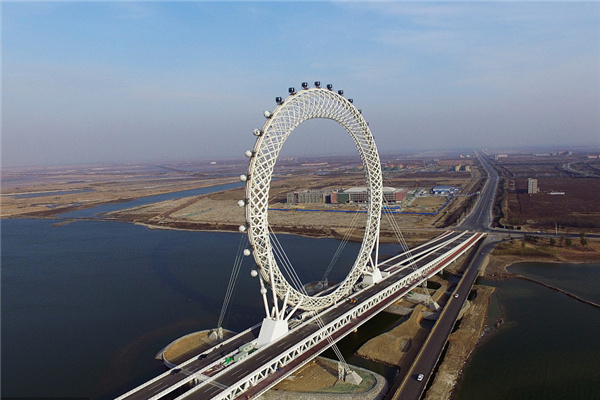 World's largest shaftless Ferris wheel built in China
 Ancient cities to be connected by Xi'an-Chengdu high-speed railway
 Snow turns Harbin into winter wonderland
 Reed Catkin Festival held in Wuhan
 Is it a building or a bookshelf?
 First flight
 Polar icebreaker Snow Dragon arrives in Antarctic
 Xi's vision on shared future for humanity
 UN's top environmental honors go to three in China
 German trains collide near Duesseldorf, several people injured
 China beats Germany 7-4 in men's curling Olympic qualification
 Bayern beat Paris Saint-Germain 3-1 in UEFA Champions League


Copyright 1995 - . All rights reserved. The content (including but not limited to text, photo, multimedia information, etc) published in this site belongs to China Daily Information Co (CDIC). Without written authorization from CDIC, such content shall not be republished or used in any form. Note: Browsers with 1024*768 or higher resolution are suggested for this site.
License for publishing multimedia online 0108263 Registration Number: 20100000002731