CHINA> AfDB Annual Meetings


|
CHINA> AfDB Annual Meetings
|
|
A continent without poverty is a possibility
(China Daily)
Updated: 2007-05-16 07:05
Q: This year's annual meetings are taking place in Shanghai. What is your message for the Chinese in particular, and Asians in general, as the Chief Economist of the Bank Group? A: The key message we are taking to Shanghai is that Africa is ready for business. Indeed, Africa's landscape has changed in recent years to give credence to this message. The past six years represent one of the longest periods of sustained growth in Africa, with over 31 countries recording growth rates of over 4 percent on average. Of these, 17 countries recorded growth rates of 5 percent on average over the same period. What is encouraging about the recent performance is that while cyclical factors such as the rise in the prices of energy and other commodities like metals, and a favorable global environment have been critical to performance, we are beginning to see fundamental factors play a role. As you know, several countries across the continent have, over the last two decades, taken steps to introduce growth-oriented macroeconomic and structural reforms and also created good conditions for business in general and foreign direct investment (FDI) in particular. Under macroeconomic and structural reforms, clear efforts have been made to liberalize markets, increase legal protection for investors and reduce impediments to business enterprise development. In the process, the continent has sharpened its readiness to do business and the positive impacts of the reforms are now well recognized. The recent World Bank Doing Business Report (2007) places Africa in third position, after Eastern Europe and the Organization for Economic Cooperation and Development (OECD) countries, in the regional rankings for reforms that encourage new enterprise, formal sector jobs and growth. Moreover, two African countries, Ghana and Tanzania, are placed among the top 10 in the table of global reformers. Q: The theme of this year's annual meetings is: "Africa-Asia: Partners in Development". How do you think Africa will benefit from the supposedly win-win formula on which this partnership is based? A: As you know, the relationship between Asia and Africa goes back centuries. Over the last few years, we have seen a resurgence of Asia-Africa relations, and we see the growing significance of Asia in a number of areas, including trade, investment, development assistance, and recently, in peacekeeping - all to Africa's benefit. Second, Asia's unprecedented economic performance over the past three decades provides Africa with important lessons for sustained economic growth. Africa and Asia are able to share experiences in a number of areas, including creating a conducive business environment, macroeconomic management, the role of the state, creating less discretionary institutions, and promoting skills development. Third, African countries could benefit from the special relationship through technology transfer and management training, by way of joint ventures and bilateral trade agreements with Asia. Fourth, some of Africa's development constraints could be eased through Asia's potential for scaling up development assistance and "aid-for-trade" to countries in the region. Q: Asia's rapid economic transformation has intrigued the world. Are there relevant lessons Africa can learn from Asia's experience? A: Certainly, there are relevant lessons for Africa from Asia's experiences. At least three key factors have contributed to the rapid economic transformation of Asian economies. First, impressive achievements in Asia have been driven by high savings rates and large FDI inflows. Asian countries invested heavily in basic infrastructure, including roads, schools, water, sanitation, irrigation, clinics, telecommunication and energy, which served as a foundation for technological learning. Second, a steady supply of increasingly skilled labor created by a strong education system. Asian governments supported, funded and nurtured institutions of higher education, as well as academies of engineering and technological sciences, professional engineering and technological associations. Third, Asia was able to carefully balance the relationship between politics and economic management, and was thus able to develop strong institutions that supported the flourishing private sector. Although Asia still faces challenges in a number of areas, including infrastructure constraints, climate change and addressing the problems of inequality, the main lesson for us is that it is possible to move significant populations out of poverty and transform agrarian economies into middle-income countries integrated into the global trading environment. Q: Some people hold the notion that unless African countries negotiate as a group with a strong China, they, as individual nations, might not attract more investment from their relationship with the economic giant. What is your take on this? A: The problem is not a strong China or Asia, rather it is Africa's ability to negotiate within an international forum. Africa has a population of close to 900 million people distributed across 53 countries. At the same time, as many as 36 countries had GDP below $10 billion in 2006. The bottom line is that individually, African countries are too small to make an impact in international diplomacy. Therefore, it makes sense for them to negotiate either within the regional economic communities, as is happening in the case of Economic Partnership Agreements (EPAs) being negotiated with the EU and ACP (African, Caribbean and Pacific) countries, or as a continental body. It is now a truism that Africa faces serious capacity constraints, not only in negotiating effectively but also in setting or influencing the negotiating agenda. There is, therefore, an urgent need to strengthen the negotiating capacity of African countries both qualitatively and quantitatively, to help them derive maximum benefits in their international relationships. (China Daily 05/16/2007 page27) |

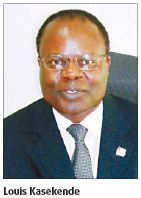 Editor's note: Africa is ready for business and Asia's experiences and lessons learnt are paving the way for the continent. Chief Economist of the African Development Bank (AfDB) Louis Kasekende shares his views in a recent interview.