Society
Chinese flock to US for further education
By Tan Yingzi (China Daily)
Updated: 2010-11-17 07:15
 |
Large Medium Small |
|
|
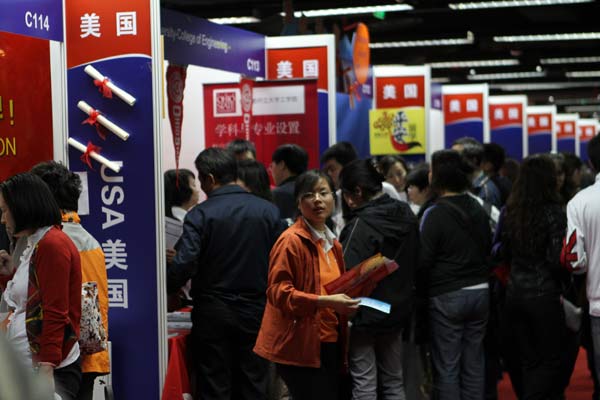
Growing wealth fuels trend for acquiring foreign academic degrees
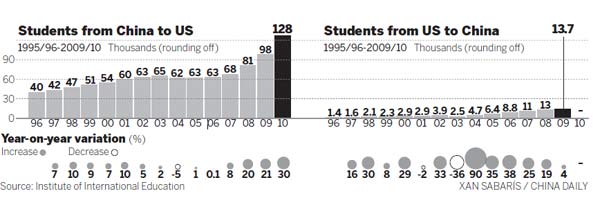
WASHINGTON - Thanks to strong economic growth and a growing middle class, China has surpassed India for the first time this decade to become the country that sends the most students to the United States, according to the annual report the Institute of International Education (IIE) released on Monday.
The number of Chinese students in the US has increased by 30 percent during the 2009-2010 academic year to about 128,000, or 18.3 percent of the total international student population in the country, the report said.
India, which has been in the leading position in recent years, has seen its figure grow by only 2 percent in the past academic year to a total of about 105,000.
The report shows the top three majors for Chinese students are business and management, engineering, and physical and life sciences. Meanwhile, more than a third of Indians choose engineering and a fifth study math and computer science.
According to the US Department of Commerce, international students contributed $20 billion to the US economy in 2009, as about two-thirds rely primarily upon personal and family funds to pay for their studies.
Although most Chinese in the US study in graduate schools, more and more younger Chinese students enroll in undergraduate programs.
Last year, the number of Chinese undergraduates in the US increased by 50 percent year-on-year to nearly 40,000, more than four times as many as five years ago.
"The biggest growth among Chinese students is at the undergraduate level," said Peggy Blumenthal, executive vice-president of IIE.
"The Chinese economy is booming. The growing middle class are able to send their children abroad for higher education as many families have only one child and they use all their resources on that child."
Another reason, she said, is that many Chinese parents are attracted by the US higher education system, which boasts multidisciplinary studies, active student participation, joint faculty-student research and promotion of innovation and creativity.
"American undergraduate education is really appealing to Chinese parents who are thinking about what is needed for China in the future and how their son or daughter can be employable," Blumenthal said.
Chinese overseas study agencies expect more Chinese students to go to the US next year, partly due to the weakened US dollar and more flexible visa policies.
The study and living costs for an undergraduate Chinese student in the US every year are roughly about 250,000 yuan ($37,000), and the depreciation of the US dollar may save about 10 percent of the cost, said Liu Qingsheng, a senior manager with Shinyway International, a Beijing-based overseas study consulting company.
A more flexible visa policy, which the US started to adopt in 2008, is another major attraction, he said.
Since China implemented the reform and opening-up policy in 1978, the US has been the most popular destination for Chinese students. But the Chinese government used to worry about the brain drain as previous statistics showed that only one in four Chinese students went back to China after getting degrees in foreign countries.
Among them, the science and engineering PhD students in the US are the most reluctant group to return home. It is estimated that nearly 90 percent of them will stay at least five years in the US after graduation.
But recently, especially since the 2008 global financial crisis, the brain flow trend has started to reverse.
Some observers have noted that a substantial number of highly skilled immigrants have started returning to their home countries, including persons from low-income countries such as India and China who have historically tended to stay permanently in the US, according to a study by Vivek Wadhwa, a senior research associate with the Labor and Worklife Program at Harvard Law School.
He finds that the most significant factors in the decision to return home are career opportunities, family ties and quality of life.
"Intellectual circulation is really what defines this century compared to international education exchange in the last century," said Allan Goodman, IIE president and chief executive.
The report also found that China, as the fifth largest host country of US students, is the only one of the top five to show any increase in the numbers for 2008-2009.
In 2008-2009, 238,184 international students studied in China. South Korea, the US and Japan were the top countries of origin.
China Daily
(China Daily 11/17/2010 page4)
 主站蜘蛛池模板:
大兴区|
长寿区|
游戏|
东辽县|
曲水县|
中西区|
江山市|
金山区|
寻乌县|
化德县|
元朗区|
西充县|
绥滨县|
华阴市|
江门市|
霍州市|
彭泽县|
壤塘县|
海门市|
开江县|
乌拉特中旗|
射洪县|
沂水县|
襄樊市|
来安县|
永登县|
都匀市|
淮阳县|
崇明县|
星子县|
日土县|
固安县|
武夷山市|
邹城市|
庄河市|
微山县|
凤城市|
大洼县|
宜昌市|
抚顺县|
柳州市|
宣威市|
克拉玛依市|
同江市|
洪江市|
云林县|
怀化市|
天全县|
苍溪县|
湛江市|
三穗县|
长武县|
新蔡县|
进贤县|
禄劝|
永平县|
靖远县|
阜阳市|
竹北市|
三明市|
陇南市|
张北县|
全椒县|
宁波市|
柳林县|
德惠市|
鄂州市|
灵山县|
剑阁县|
榆社县|
大石桥市|
景宁|
潼南县|
博野县|
汝阳县|
醴陵市|
奉贤区|
彭山县|
萨迦县|
乌拉特中旗|
崇阳县|
富蕴县|
主站蜘蛛池模板:
大兴区|
长寿区|
游戏|
东辽县|
曲水县|
中西区|
江山市|
金山区|
寻乌县|
化德县|
元朗区|
西充县|
绥滨县|
华阴市|
江门市|
霍州市|
彭泽县|
壤塘县|
海门市|
开江县|
乌拉特中旗|
射洪县|
沂水县|
襄樊市|
来安县|
永登县|
都匀市|
淮阳县|
崇明县|
星子县|
日土县|
固安县|
武夷山市|
邹城市|
庄河市|
微山县|
凤城市|
大洼县|
宜昌市|
抚顺县|
柳州市|
宣威市|
克拉玛依市|
同江市|
洪江市|
云林县|
怀化市|
天全县|
苍溪县|
湛江市|
三穗县|
长武县|
新蔡县|
进贤县|
禄劝|
永平县|
靖远县|
阜阳市|
竹北市|
三明市|
陇南市|
张北县|
全椒县|
宁波市|
柳林县|
德惠市|
鄂州市|
灵山县|
剑阁县|
榆社县|
大石桥市|
景宁|
潼南县|
博野县|
汝阳县|
醴陵市|
奉贤区|
彭山县|
萨迦县|
乌拉特中旗|
崇阳县|
富蕴县|