|
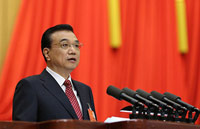
Speaking at the annual session of the National People's Congress (NPC), China's top parliamentary body, Premier Li Keqiang said that the nation wants to eliminate poverty by 2020. With more than 70 million Chinese living below the poverty line—an annual income of 2,300 yuan (about $350)—it appears an extremely difficult target to reach.
But having reduced its extreme poverty rate from 84 percent in 1980 to approximately 10 percent by 2013, China has an enviable track record of meeting tough targets and has a greater history of poverty alleviation successes than any other nation in the world. Between 1980 and 2005, China's progress alone accounted for about 70 percent of the overall global decline in poverty.
China's incredible achievements in reducing poverty are often traced back to the reform and opening up strategy initiated at the third plenum of the 11th Communist Party of China Central Committee in 1978. In particular, the de-collectivization of the nation's agriculture is widely regarded as crucial; by allowing for local conditions and local initiative, production efficiency was increased.
And reforms also gave more freedom to rural dwellers, allowing them to open small businesses and gain a degree of financial independence. Rural residents also became more exposed to and appreciative of education, enabling them to develop their skills and expertise, which in turn reduced dependence on the state.
Historically, China's rural areas were the most impoverished parts of the country, but the CCP has long encouraged and facilitated rural to urban migration under an "urbanization" plan, largely by providing a subsidy for urban residents to lift their annual incomes to about $700.
As many people of working age left rural areas to seek employment in towns and cities, the Party has tried to minimize poverty among those who remain in the countryside and small villages by implementing a rural pension scheme.
Despite such vast progress in the past 40 years, major challenges remain. China faces a widening wealth gap, particularly between urban and rural residents; it has many outdated and bloated state-run enterprises, such as coal mines and steelworks; and the nation is attempting to eradicate poverty during its slowest rate of economic growth for the past 20 years.
Moreover, as China moves forward with a nationwide urbanization plan, there are new challenges, such as the lack of jobs and problems with building quality in newly-created and newly-developed urban areas.
Copyright 1995 - . All rights reserved. The content (including but not limited to text, photo, multimedia information, etc) published in this site belongs to China Daily Information Co (CDIC). Without written authorization from CDIC, such content shall not be republished or used in any form. Note: Browsers with 1024*768 or higher resolution are suggested for this site.
License for publishing multimedia online 0108263 Registration Number: 20100000002731