Why Xi is talking about the 'toilet revolution'
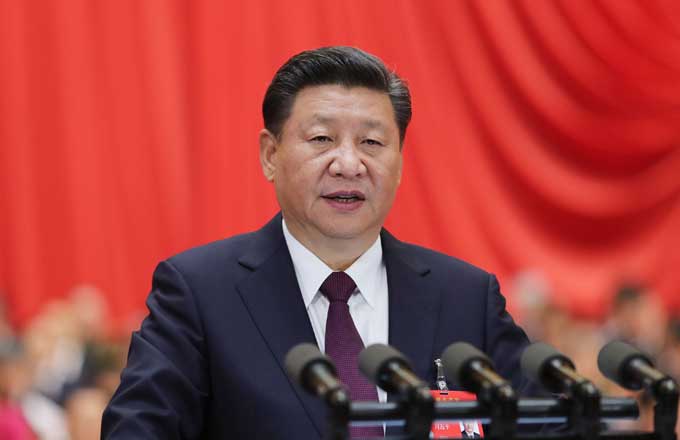
BEIJING -- President Xi Jinping on Monday called for continued efforts to upgrade the country's toilets as part of an ongoing "toilet revolution" campaign.
Why has China started this campaign, and why has China's top leader personally spoken out on this seemingly petty issue? Xi's latest instructions provide some answers.
To understand it better, it is necessary to look into what Chinese toilets were in the past and the far-reaching impact of the toilet renovation.
RURAL DEVELOPMENT
Although China has become the world's second-largest economy, some toilets in poor rural areas are still little more than makeshift shelters surrounded by bunches of cornstalks, while others are open pits next to pigsties, leading to problems such as contamination and pollution from human waste.
While the living standards in cities have drastically improved with China's stellar economic growth, more attention is needed to improve the living environment for the country's 600 million rural people.
That is why the government has invested big to build new toilets in the poorest parts of the country. From 2004 to 2013, the investment totaled 8.27 billion yuan. By the end of 2015, some 75 percent of rural homes had flush toilets or dry toilets with underground storage tanks that had walls, roofs, doors, windows and were at least two square meters in size.
But obviously it's not enough. China launched a "toilet revolution" nationwide in 2015 to make such facilities cleaner and more regulated.
As toilets are a part of everyday life and affect quality of life of the Chinese people, the Chinese government, which has promised to dedicate itself to the well-being of all citizens, must squarely face the problem.
While visiting rural areas, Xi has asked local residents about the conditions of the toilets they use, and stressed many times that clean toilets for rural residents are important for building a "new countryside."
TOURISM AND ECONOMY
While China has rich tourism resources, unhygienic toilet facilities at the country's tourist sites have long been a big put-off for visitors.
At a time when traditional growth drivers are losing steam, China has pinned hopes on services, including tourism, as a new force to support economic growth, and improving public facilities at tourist sites has become an urgent task.
A three-year "toilet revolution" launched in 2015 saw over 20 billion yuan (about $3 billion) invested in installing or renovating 68,000 toilets at tourist sites, exceeding the target of 57,000 toilets.
For the coming three years, authorities aim to add 47,000 toilets and renovate 17,000, according to a plan released by the China National Tourism Administration (CNTA).
"Compared with the rapid growth of the tourism industry and people's increasing demand for better lives, the development [of toilets] is unbalanced and inadequate. Another three-year program is urgently needed," said Li Jinzao, head of the CNTA.
China's domestic tourism industry earned about 3.9 trillion yuan in 2016, and the country plans to raise tourism revenue to 7 trillion yuan by 2020.
OPPORTUNITIES FOR MADE-IN-CHINA
In recent years, there has a frenzy among middle-class Chinese to buy smart toilets during trips to Japan, even though many of these items are actually made in China.
Hoping to ride the wave of China's "toilet revolution," many Chinese companies are making efforts to manufacture and market high-end products on their own.
According to a report by China Household Electrical Appliances Association, the market size for China's domestic smart toilet sector has grown by 59 percent year on year to reach 3.1 million units in 2016.
But the penetration is as low as 1 percent, meaning there is still an immense potential market in China, according to the report.
The ongoing "toilet revolution," against the backdrop of a broader campaign to upgrade Made-in-China products, will hopefully bring changes that reach beyond the industry.