Education Special: Blend of Eastern, Western education offers new model
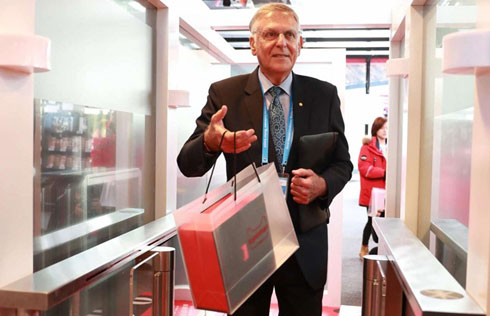
At the ongoing Annual Meeting of the New Champions in Dalian, Sherman Jen, president and CEO of Maple Leaf Educational Systems, is speaking in a number of sessions to showcase the company's model of international education.
A recent recipient of an honorary doctorate of laws from Royal Roads University in Victoria, Canada, Jen is recognized as a leader in the development of international education.
The educational system he has created in China is built on the belief that blending the educational practices of the East and the West will better prepare its students to be global citizens.
Jen said globalized individuals with a strong foundation of cultural understanding will be prepared to take on challenges and seize opportunities.
Born and raised in China, Jen has worked in Hong Kong and Vancouver. It was during his time in Canada that he developed the idea of creating an educational system that would blend elements of the Canadian and Chinese education models.
He opened his first school, Maple Leaf International School - Dalian, in Liaoning province in 1995 with only 14 students. The Canadian province of British Columbia accredited this school in 1998, establishing it as Canada's first school overseas.

The school introduced to China British Columbia's high school program, covering grades 10 to 12. The program integrates the requirements needed to receive a diploma from China or the Canadian province.
Classes are taught in English and Chinese, and upon completion of all academic requirements, students receive high school diplomas from China and British Columbia.
Maple Leaf International Schools are now located in eight cities throughout China, enrolling more than 12,000 students. Maple Leaf Educational Systems - or MLES - includes 34 schools including 12 preschools, six elementary schools, seven middle schools, seven British Columbia-certified high schools and two British Columbia-accredited schools for foreign nationals.
In the 2013-14 school year, more that 6,000 students have been registered as British Columbian offshore students in seven high schools and two foreign national schools. The programs are delivered by more than 1,500 staff members, including more than 350 Canadian teachers and principals certified by British Columbia's ministry of education.
Since 1999, almost 7,000 students have graduated from MLES schools. They have all gone on to post-secondary studies, with more than 65 percent choosing to study in Canada and approximately 18 percent choosing the US.
Respected brand
As a major foreign-China joint venture school network, Jen said MLES has become a recognized and respected education brand in both China and Canada.
On the road from its humble beginnings in 1995 to its emergence as a burgeoning schools system in 2013, there have been many challenges and developments, he said.
The school's success has been largely due to the development and refinement of a number of educational systems that together create one strong and unified system of international schools throughout China.
Jen explained that the systems include the education system, the school construction and facilities management system, the administrative system and the management training and development system. Each of these in turn is made up of a number of program, projects and departments.
The educational system includes the blended academic curriculum model, the Maple Leaf English Language Learning model, a unique moral education program, a model for cultural development and integration and a system of graduation services.
The school construction and facilities management system develops school facilities that complement the academic programs through the creation of unique MLES school designs and physical resources management.
The educational administration system includes a number of business departments responsible for various student services.
Through management, training and development, MLES give employees a solid understanding of the uniqueness of the Maple Leaf model and programs that aim to develop leaders from within the system.
Jen said these systems all work together, coordinated through the president's committee.
MLES philosophy
To a large degree, the success of MLES has been built on the foundation of a clear educational philosophy that is shared and understood by students, parents, teacher and administers, Jen said.
By blending elements of the innovative and inquiry-based Western educational model with the culturally rich and disciplined traditional Chinese model, students will be best prepared to meet the challenges of living and working in an internationally diverse society, Jen said, explaining the school system's guiding principle.
The philosophy assumes that every child has a strong desire to learn and to develop an understanding of the world; to share their knowledge; and to communicate their understanding, thoughts and feelings through wide-ranging personal expression.
Jen said MLES schools provide an international education that emphasizes academic excellence within a supportive community that respects and promotes cultural values and traditions for Chinese and international students.
He added that MLES schools measure success by the extent to which they guide each student in the exploration of their interests; assist them in the accomplishment of their goals; and promote a sense of self-fulfillment and pride.
All the schools endeavor to create a diverse, dynamic and engaging learning environment in which students feel safe, supported and empowered to fully develop their abilities, interests and creative talents.
Jen said the goal of MLES is to develop top students and provide opportunities that prepare them for their future academic endeavors.
Global perspective
In an August meeting, Jen said: "Our Chinese-Western blended education not only provides the academic system, the model and the quality of education but also offers us a higher vantage point for viewing education.
"Our more than 7,000 graduates go out from their home countries, from our Maple Leaf schools, as global citizens, and they become the peace envoys advocating greater understanding among peoples. It is our responsibility to ensure that our schools prepare them for this role."
Jen also spoke on the role of international education, and specifically the Maple Leaf blended education model:
"There are many challenges, but I think lots of opportunity exist to make major changes. Maple Leaf has created a model based on blending cultures. This is a most challenging model to maintain - it takes constant effort to understand each other - but it brings great opportunity.
"The world is full of conflict because people don't understand each other. A blended model of education can serve to promote understanding.
"As we look forward to future opportunities, we strive to have an important impact in promoting blended models of education worldwide that will bring people together. Bringing people together and ending conflict is at the heart of the blended model of global education."
Jen said access to global education is important for all students for two primary reasons - preparing them for global competition and engendering a sense of global citizenship.
"These two factors will determine success for the individual and for a nation. MLES and all Maple Leaf International Schools are playing an important role in this movement and take this role very seriously," Jen said.
zhuanti@chinadaily.com.cn
|
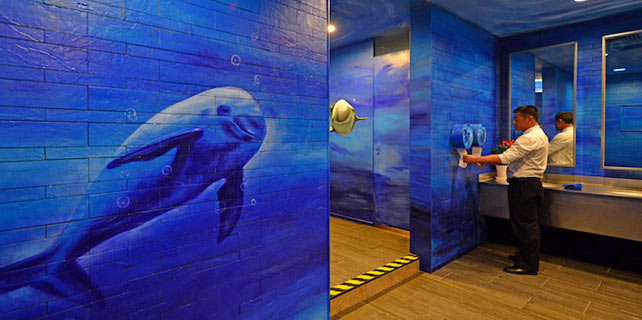
Schools operated by Maple Leaf Educational Systems integrate Western and Chinese educational models to prepare students to take on the role of global citizens. Photos Provided to China Daily |

(China Daily 09/13/2013 page12)