Location and tradition hold the key when it's time for tea
Across China, different areas have generated and developed their own teahouse culture.
In Zhejiang province, one of the tea producing areas, drinking tea and going to teahouses have long been away of life.
"As far as I can remember, teahouses are always busy and full of customers," said Liu Junyao, 25,who comes from Lishui, a city in the southwest of the province, and who used to work in Hangzhou, the provincial capital.
Teahouses in Hangzhou represent the Wu Yue culture, being exquisite and elegant.
These venues pay a great deal of attention to the environment, both outside and inside.
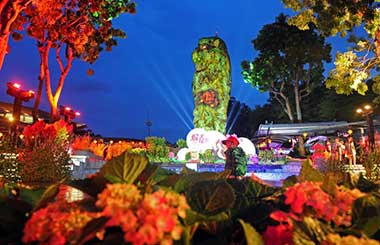
At teahouses decorated in traditional Chinese style, visitors can see water flowing beneath little bridges, while outside is the West Lake tourist attraction or other sights.
Teahouses used to be popular destinations for the older generation, but are now attracting the younger generation in greater numbers.
When Liu was still in Hangzhou, she and her friends would visit and eat at a teahouse almost every time after they went hiking.
"We treat the teahouse more like a restaurant," she said. "But only if there is delicious and delicate food." She feels that teahouses are trying to attract younger customers with different types of food.
In the southwestern province of Sichuan, people have also been especially keen to visit teahouses, while the custom behind drinking tea here is quite different to that in Hangzhou.
While teahouses can be seen throughout Sichuan, locals care more about their function rather than the manner in which they are decorated.
Teahouses in this province can be compared to a small society where people share information, settle bargains, or even deal with family issues.
Liang Yu, 26, from Sichuan province who now works in Beijing, said people will sometimes call the teahouse a mahjong house, as most of the time they go to there to play poker or mahjong.
"I feel as if everyone goes to the teahouse all the time," Liang said. "Teahouses are part of life."
In southern China, Cantonese like to drink their Puerh tea and eat countless varieties of dim sum.
Many teahouses are now more like restaurants for people to dine together. Although Cantonese will say they still go there to have morning tea as before, the emphasis has switched from drinking tea to eating dim sum.