|
|
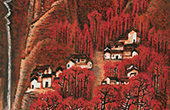
Barbara Stumph (left) and Yolanda Bacani show off their Chinese paintings at a workshop during a conference of the East-West Center in Beijing on Sunday. Zou Hong / China Daily |
In Barbara Stumph's online world, ink is glue.
The Web group the 66-year-old retired teacher started in 2000 holds together a community of non-Chinese from around the world, who adore Chinese ink painting but are otherwise geographically - and culturally - isolated from it.
The about 200 members hail from 17 countries and 23 US states.
"They're isolated," Stumph explains.
"They live in communities with no Chinese. They have paint brush books but no one to talk to."
She gives the example of a Canadian man, who's very involved in the group, but lives in a remote Inuit community far from any Chinese.
"I thought I'd just be a Web monitor, but I became a learner, too," Stumph says.
"I had no idea this would happen when I started - or how it would change my life."
Stumph believes her global Web group is a modern take on ancient Chinese tradition.
"In China, there's a tradition of scholars meeting to discuss over tea or wine," she says.
Her members just do it over keyboards, instead.
She points out that, despite a reverence for classical practices, ink painting and the customs surrounding it have never been stagnant.
Pan Tianshou (1897-1971), for example, painted with his fingers and fingernails, she explains.
"Chinese painters were often venting, protesting and changing tradition," she says.
Stumph particularly admires Qi Baishi's (1864-1957) shrimp paintings - and his hands-on approach to creating them. The artist kept a bowl of the crustaceans on his desk for 30 years.
"He'd take them out and play with them," she explains. "He'd tickle their bellies with his brush."
Her group also experiments and even tries such unorthodox methods as painting with instant coffee, Stumph explains.
Some members work on parts of paintings and mail them to other members in different countries to add to. They've also started a series of ink painting "trading cards".
Her "virtual friends" have become her family, especially after she met several of them for the first time in China, where they sojourned the Silk Road.
Stumph returned to China to host the workshop Community Building with Four Treasures: Chinese Ink, Brush, Xuan Paper and Stone at Peking University for the East-West Center on Sunday.
Becoming an ink painter is a mission she declared during a museum visit after she finished her China studies program in 1965 - "a very unusual thing back then", she says.
She recalls being impressed at the tail strokes of a rooster painting.
"I said to myself: 'Do I want to spend the next 40 years taking people to the museum, or do I want to learn how to make one myself?'"
She went beyond creating them herself to teaching others how to, too.
Filipina Pauline Bautista, who joined her Beijing workshop, says: "Her class gives an entirely new perspective on Chinese brush painting. I really enjoy the yin and yang perspective, and that there's a continuous learning of an ancient art that has become a global interest."
Filipina Yolanda Bacani says the class helped her realize brush painting is more meaningful than she'd known.
"Now, I won't just see colors and strokes but also the meanings and messages behind."
erik_nilsson@chinadaily.com.cn
|
|
|
|
|
|
|
|

Copyright 1995 - . All rights reserved. The content (including but not limited to text, photo, multimedia information, etc) published in this site belongs to China Daily Information Co (CDIC). Without written authorization from CDIC, such content shall not be republished or used in any form. Note: Browsers with 1024*768 or higher resolution are suggested for this site.
License for publishing multimedia online 0108263 Registration Number: 130349 











 Raymond Zhou:
 Pauline D Loh:
 Hot Pot
 Eco China
 China Dream
 China Face