|
Home>News Center>China | |
|
|
|
|
|
|
|
|
|
|
||||||||||||||||||||||||||||||||||||||||||||||||||||||||||||||||||||||||||||||||||||||||||||||||
|
|
Online voters oppose Japan's new role
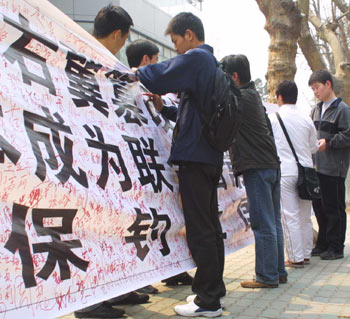
They cannot vote which nations should have a seat on the United Nations Security Council, but ordinary people have shown their feelings. By Tuesday afternoon, over 11.5 million people in and outside China had signed an online petition saying Japan should not succeed in its bid for a permanent seat on the Security Council.
Japan is pressing for permanent membership of the Security Council. One of the ruses it has presented is the fat cheques it has given to the United Nations. To Japanese, a seat on the council is a natural privilege. Some Japanese politicians said their country is ready to play a more active role in global affairs, and their country's contribution can no longer be limited to financial aspects. The petition by 11.5 million people tells Japan that money alone cannot buy their hearts.
Japan is reluctant to confront its brutal colonization of Asian countries in the 1930s and 1940s. A new history textbook that a right-wing Japanese organization has submitted for official approval goes so far as to paint Japan as a "victim" in World War II. Its authors even claim that China provoked all the wars between the two countries. Japanese Prime Minister Junichiro Koizumi turned down an invitation to a grand party in Moscow on May 9 to celebrate the 60th anniversary of the end of War World II. Koizumi's absence will do nothing but encourage more probes into his country's historical baggage, particularly how the country deals with it. Japan is so sensitive to its historical "scars" that it has named August 15 the day of armistice. On that day in 1945, Emperor Hirohito's announcement of Japan's acceptance of the terms of the Potsdam Declaration was broadcast to the Japanese people on the radio. Japan signed its formal surrender on September 2, 1945. Japanese politicians continue to visit the Yasukuni Shrine. Wartime leader and convicted war criminal Hideki Tojo, as well as five other hanged war criminals, are buried at the shrine. They talk about peace during the visits and ask their Asian neighbours to understand Japanese culture which requires them to visit Shinto shrines to mark seasonal celebrations. But they are numb to the pains that the Japanese invasion brought on other Asian countries. How can a nation sleep with such a history on its conscience? Japan's deliberate amnesia of the uncomfortable parts of its history sends a chill through the hearts of its neighbours. Contributing to the fears is the rising popularity of Japanese nationalism. Japan has been trying to be "normal" by amending its pacifist constitution and by proposing to have an army capable of offensive military operations. Article 9 of Japan's current constitution prohibits it from maintaining armed forces and deploying them overseas. The Research Commission on the Constitution in the Japanese House of Representatives published a final report on March 23. It offers proposals on establishing Japan's right to national defence and re-establishes the Japanese emperor, a symbolic figure, as the Japanese head of state. The commission emphasized that "in matters of self-defence, we should allow the use of force (against another country), and utilize the army for international co-operative activities." The report, published with the approval of both the ruling and opposition parties, is expected to act as a blueprint for Japan's constitutional amendment process, which will begin next year. Japan's moves to usher in a new era of military activism has not been accompanied by soul-searching about its past, or led to a consensus about what taking on more global responsibility means. Where does the moral foundations lie for Japan to become a permanent member of the Security Council, which shoulders obligations for maintaining world peace? What Japan has failed to address is the critical issue of whether in its present moral shape it would be able to exercise an enlarged international role. The amount of money Japan gives the United Nations does not necessarily give the country leverage in international affairs. Neither will a permanent seat on the Security Council free Japan from its historical baggage. |
|
|
|
|
|||||||||||||||||||||||||||||||||||||||||||||||||||||||||||||||||||||||||||||||||||||||||||||
|
|
|
|
||||||||||||||||||||||||||||||||||||||||||||||||||||||||||||||||||||||||||||||||||||||||||||||||