|
Home>News Center>Life | |
|
|
|
|
|
|
|
|
|
|
||||||||||||||||||||||||||||||||||||||||||||||||||||||||||||||||||||||||||||||||||||||||
|
|
A Chinese painter's new struggle: to meet demand
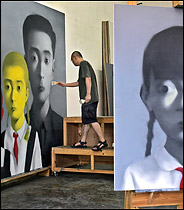
In a large warehouse studio on the outskirts of China's capital, Zhang Xiaogang was trying to explain how he goes about painting each day.
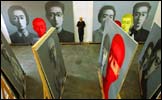
Much of the time, he said, he simply locks himself up in his studio every afternoon about 2 o'clock, trying to concentrate. "When I start painting I can't stop," he said gesturing to a large portrait of a boy soldier, one of about a dozen paintings that line his 3,000-square-foot studio. "I've got to get this side down before it dries. When I painted this piece I got distracted. The color changed a little. You probably can't notice it, but I can." Mr. Zhang, 47, is one of China's best-known artists. For years, his works - like those of other avant-garde artists of his generation - could not be exhibited in China, often because they were deemed too modern or questionable. But now his paintings are not only collected by wealthy Westerners and leading foreign museums, but they are also increasingly fashionable among well-to-do Chinese and are being exhibited in China's state-run museums and galleries. Early next year, one of Mr. Zhang's largest works - a mural 39 feet long by 9 feet high - is to be unveiled in the subway system being built in the bustling southern city of Shenzhen, alongside works of two other leading contemporary artists, Wang Guangyi and Fang Lijun. Much of Mr. Zhang's acclaim over the last decade stems from a series, called "Bloodline: Big Family," of largely black-and-white oil paintings inspired by formal family photographs of the 1960's and 70's.
At a time when China's contemporary-art scene is sizzling, with dozens of galleries opening in Beijing and other cities and works being auctioned for record prices, few artists are as celebrated as Mr. Zhang, whose paintings can now fetch as much as $200,000 each. "You can't even get his works right now," said Weng Ling, director of the Shanghai Gallery of Art. "He's that popular. There is a long waiting list even to show his works." But for such a highly sought-after artist, Mr. Zhang has an unassuming manner. He dismisses talk of his fame. "I'm just a simple painter," he said. "I just paint what appeals to me." But he is hardly simple. It has been a long journey for this artist whose early years were marked by depression and whose first paintings were filled with skulls and dismembered bodies. Mr. Zhang was born in 1958 and grew up in western China's Sichuan Province, the third of four sons born to government officials. So he was 8 in 1966 when the Cultural Revolution touched off a decade of political and social upheaval in China - one in which students assaulted their teachers, children denounced their parents and party elders paraded through the streets wearing dunce caps. Almost every night at the beginning, Mr. Zhang said, "people came to our house and asked my parents to make confessions about what they did wrong." His parents were later sent to work in the countryside, leaving him and his three brothers in the care of an aunt for several years. He spent much of his childhood drawing. "My mother was afraid I'd go out and get in trouble so she taught me how to draw," he explained. "And that's what I did." He spent long hours sketching at home, he said, imitating comic strips and drawing heroic battle scenes of Chinese fighting against Japanese. In early 1976, like so many youngsters in China, he was sent to farm in the countryside. But after Mao died later that year and the Cultural Revolution drew to a close, colleges around the country began reopening and Mr. Zhang enrolled at the Sichuan Academy of Art. He studied Soviet-style realism but says he gravitated toward Western art, particularly the works of van Gogh, Gauguin and Dalí. After college, he worked briefly designing sets and costumes for a dance
troupe. Then he taught art in Sichuan and began searching for his own style.
|
|
|
|
|
|||||||||||||||||||||||||||||||||||||||||||||||||||||||||||||||||||||||||||||||||||||
|
|
|
|
||||||||||||||||||||||||||||||||||||||||||||||||||||||||||||||||||||||||||||||||||||||||