In defense of tradition
 |
|
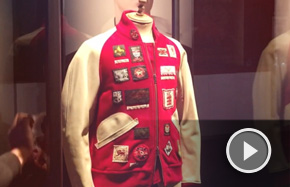
Top: Waitresses in Fangshan are clad in full court regalia - from tasseled mortar board head gear to wooden Manchurian clogs. Provided to China Daily Above: Li Shuangjin, executive chef of Fangshan Restaurant. Ye Jun / China Daily |
He oversees one of the most respected kitchens of China, where the imperial cuisines from the Qing Dynasty courts are still replicated every day. Ye Jun reports.
It is hard to change when people have very fixed expectations of how and what you should serve, but within those perimeters, Fangshan Restaurant's executive chef Li Shuangjin still acknowledges market trends.
His restaurant is located inside Beihai Park, next to some very illustrious neighbors at the heart of the Forbidden City. Fangshan serves imperial-style food from the Qing Dynasty (1644-1911) palace.
Regulars at Fangshan go there for the ambience, aided by thick curtains of bright yellow brocade and tableware that features the royal insignias of dragon and phoenix. It's all more than 80 years old and patrons are there exactly for the royal traditions.
"Even when we place knives and forks on the table for the sea cucumber dishes, some complain that it is not in the imperial style," Li says. Nonetheless, he insists, Fangshan operates with an eye on the latest culinary trends.
"We try to serve foods according to the season, and customers' dining habits," he says.
He trots out the examples. There are now cashews instead of peanuts in the gongbao chicken. The double-braised prawns are now presented differently. The camel hoof now comes with fresh vegetables to ease the grease.
"I'm trying different cooking methods and ways of seasoning to improve original ingredients, so they have better taste and texture," says Li, 53.
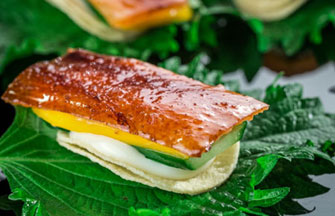
Menus of the imperial cuisine typically use rare and valuable ingredients, the mountain pleasures and sea treasures so beloved of Chinese gourmets. These may include camel hooves, venison and rare fungus from the mountains, and sea cucumber, fresh fish, abalone and lobsters from the waters.
Another attraction that makes Fangshan stand out from other restaurants is its bevy of waitresses clad in full court regalia - from tasseled mortar board head gear to the wooden Manchurian clogs. The costumed girls also greet diners with the usual curtsy reserved for aristocracy and wait at the table serving up food on palace-style tableware carefully arranged according to imperial traditions.
This entire process has been awarded the status of national level intangible cultural heritage.
Li himself, while not a direct descendant of the imperial kitchen chefs, was an apprentice of Gu Jiuru, the executive chef of the Quanjude Group.
He first learned to cook in 1978 and became a certified national level cuisine master in 2006, an award given by the China Cuisine Association. He worked for more than 20 years in Quanjude Peking Roast Duck Restaurant and was executive chef of its Guomen branch.
He came to Fangshan in 2007. Both Quanjude and Fangshan serve cuisine that is rooted in the Shandong tradition.
"The chef's profession used to be called qinhang, the laborious trade, because it was hard work." Li says. "How good he becomes depends on how much he pays out."
Techniques such as flash frying are tests of experience, timing and speed. The color, tenderness and flavor may be just right only seconds after a ladle of sauce is added to the frying pan.
"Chinese cuisine depends on the chef's palate," he says. "You can't depend completely on your teacher. Or on a recipe - even if you write it down." You have to taste it, and therein lies the true test.
To Li, a chef is only good enough when he can get perfect at least eight or nine dishes out of 10. Meanwhile, his mission is to guard the old traditions, while making sure Fangshan never goes obsolete.