Japan reflects on militarism
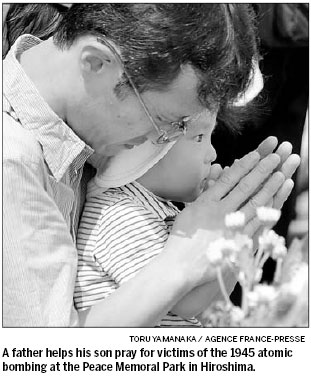
The Japanese people are in the process of commemorating the end of World War II, which officially ended for Japan on Aug 15, 1945.
A glimpse into Japanese society and politics at this sensitive time suggests that the Japanese have mixed feelings on their military past.
Japanese Prime Minister Shinzo Abe, who has been closely watched by the world for his right-wing tendencies, announced recently that he will not visit the Yasukuni Shrine on Aug 15 because it would become a diplomatic issue. The shrine honors not only Japan's war dead, but also some of its top war criminals and is considered a symbol of Japan's militarism.
During political campaigning, Abe swore that he would visit the shrine, but he has since backtracked, due to pressure from both inside and outside the country. However, he said he would not prevent members of the cabinet from going there.
Some members of the cabinet, as well as members of Abe's Liberal Democratic Party, couldn't wait to tell the world that they plan to worship at the shrine.
Administrative Reform Minister Tomomi Inada said she plans to visit the shrine on Aug 15 and had received approval from the prime minister's office on Thursday, the Asahi Shimbun reported.
She defended the planned visit at a news conference on Friday, saying that "a sovereign state should be allowed to express its appreciation, respect and remembrance to those who sacrificed their lives for their country".
The Tokyo war crimes tribunal of 1946-48 made explicitly clear that Japan's military actions since 1928 had been an act of aggression and, ipso facto, "murder". Acts of cruelty toward both prisoners of war and civilians had been so widespread as to seem almost an expression of national character, the tribunal concluded. Japan could hold memorial services for the military and civilian war dead after the defeat, but not praise them.
One can feel a sense of victim consciousness in the country generally. And the war is seen by most as a chance to remind the younger generations of the hardship and sacrifices of those years, rather to draw attention to imperial Japan's aggression and atrocity.
Indeed, Japan is always nervous and defensive when people, both at home and abroad, reopen the old wounds. Many Japanese people hold that the past is past and should be left alone.
In 1993, then-chief cabinet secretary Yohei Kono issued a statement, approved by the cabinet of former prime minister Kiichi Miyazawa, expressing "apologies and remorse" to women used as sex slaves by Japanese troops during World War II.
Contact the writer at caihong@chinadaily.com.cn