China must manage the largest urbanization in human history
Nation must balance theinterests of all areas as it pursues goal of forming nearly 20 city clusters
China's undergoing the largest-scale urbanization in human history. At least 100 million rural inhabitants of the world's third-biggest country will become urbanites by 2020.
The government's challenge is to properly manage that movement. In what balance does it spend to develop villages and counties? And where does it draw the line in making big cities such as Beijing and Shanghai bigger?
In the past 30 years, China's urbanization rate rose to 57 percent from 20 percent as market reforms concentrated wealth, technology and public resources in the big cities. That focus has exploited the villages, and many people have left their home towns to become migrant workers in search of jobs.
In its first national urbanization plan in March, the State Council, China's cabinet, unveiled plans for nearly 20 large city clusters, effectively creating megacities. Local authorities like the model, because it will be funded by the central government, or allow them to raise money through selling land as they do now.
Either way, that increased investment is the fastest way to boost economic growth. That promotes local officials while land acquisition and transfer offer opportunities for grassroots officials to line their own pockets.
And still a proper market economy must develop alongside the creation of megacities, as well as dealing with local-government protectionism.
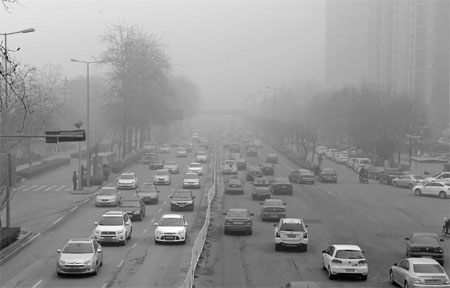
The integration of Beijing-Tianjin-Hebei, part of the national strategy, is a case in point. To ease Beijing's environmental and population pressure, the capital will transfer some industries to the polluted Hebei and crowded Tianjin, which are nearby.
The capital, though, may not ship out the more environmentally friendly industries and research and development capacities that Hebei and Tianjin would like to receive.
Amalgamation may solve one problem. Combining Beijing-Tianjin-Hebei may allow people, currently classed as migrant workers without access to education, pension and medical benefits, to become "localized."
China has successfully carried out integration projects. The Yangtze River Delta makes up 18 percent of the country's economy with 11 percent of its population on 2 percent of its surface area. Local people and governers there respected the spirit of contracts, education, frugality and personal property. They created a national commercial hub and industry center.
There are signs, though, that won't be replicated elsewhere.
To secure the central government's support, almost all city governments potentially affected by the urbanization plan are lobbying central decision makers to be included in the creation of city clusters. Among the 200 plus prefecture-level cities in China, more than 180 have proposed to become a "national center city", and dozens claim they will become an "international megacity".
A similar city-building craze happened in the mid-1980s, when the central government allowed many counties to upgrade to cities. A lot of grassroots officials felt quite happy with the changes, because their ranks were promoted. More civil servants were employed, some of whom were relatives and friends of local officials. The result was redundancy and local nepotism.
The Chinese central government must be vigilant to this.
Zhang Yu contributed to this story.
Contact the writer at liyang@chinadaily.com.cn
|
Integrated development with Beijing may not ease the air pollution in Shijiazhuang, capital of Hebei province. Many cities in Hebei are plagued by smog. Zheng Rongxi / for China Daily |