Small (business) is also beautiful
Europe's small and medium-sized enterprises have the technologies, products and services to help accelerate China's development
The Chinese economy is changing. From an average of 10 percent annual GDP growth in the years after China joined the World Trade Organization in late 2001, the prediction for 2014 is 7.4 percent. This is predicted to fall further to between 6 to 7 percent by 2020.
This is not a bad thing, especially for small and medium-sized enterprises from the European Union.
Implied in the drop is the need for the Chinese economy to restructure itself, away from export-led manufacturing, which has limitations on adding value to the economy and which is adding to China's environmental woes. The economy needs to move toward a more sustainable model based on consumption and services being a greater part of GDP growth, and toward greater productivity.
China historically has favored things that are big: Big infrastructure projects, investment in large state-owned enterprises, and incentives for multinational corporations to enter the market.
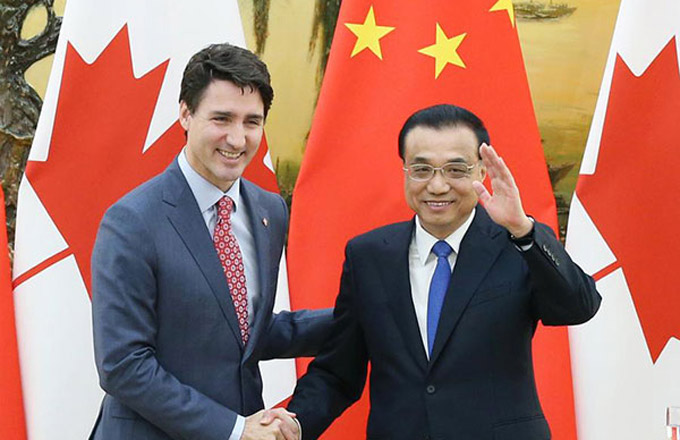
But there are signs that these smaller businesses, both Chinese and foreign, are increasingly being recognized for the part they can play in China's evolving economy. Premier Li Keqiang in recent speeches has been adamant on China's need to raise quality standards and innovate.
Europe's small and medium-sized enterprises have the technologies, products and services to play a part in accelerating China's development, be it in China's strategic emerging industries, in innovation-led growth or in the need to make Chinese workers more productive and skillful.
From the research that the EU SME Centre in Beijing has carried out, significant opportunities have been identified in a wide array of market sectors. One is the information and communications technology industry, for example, considered by the government a national priority and therefore strongly supported in 12th Five-Year Plan. It presents good prospects for European SMEs, especially in high-value niches such as mobile app development, information technology consultancy and outsourcing for financial and healthcare institutions seeking to upgrade their systems, and data integration and quality software, a segment that has shown recent growth rates of around 32 percent.
Similarly, in the food and beverage sector, SMEs can leverage the quality of their products to capitalize on the growing spending propensity of the new, and more health-savvy, Chinese consumers.
Not to mention the burgeoning Internet and mobile commerce markets, whose share on the GDP has already reached 5.5 percent and is set to continue growing in the foreseeable future.
Healthcare, in addition, is offering good opportunities to EU SMEs on account of an aging population and the authorities' focus on social welfare.
It is also not only a question of what but where. China's second- and third-tier cities, and generally inland areas, have been the targets of specific policies since the early 2000s aimed at reducing economic imbalances and closing the wealth gap between the coastal and inland parts of China.
Heavy investments in infrastructure and social safety have resulted in sustained growth rates and enhanced cross-regional market integration.
As a result, an expanding middle class has emerged, which, together with the local governments' eagerness for foreign direct investment, makes second- and third-tier cities appealing business prospects for European SMEs.
But while the opportunities are significant so are the challenges. From the many consultations that the EU SME Centre has provided, European SMEs that are resource-constrained and far away from the Chinese market find it difficult to navigate the complex bureaucratic system.
That includes understanding cultural differences when setting up a company, when negotiating and adapting their products to the market and when finding the right Chinese partners such as distributors and agents. Intellectual property rights protection also remains an ongoing concern.
Improving these aspects of the business environment will inevitably bring more goods and services from European SMEs. Equally important, though, is the need for recognition in China that SMEs can add value to the economy and that small can also be beautiful.
The author is director of the EU SME Centre in Beijing. Funded by the European Union and managed by a consortium of six European chambers of commerce, the center helps support EU SMEs. The views do not necessarily reflect those of China Daily.