Can Abe last his 4-year term?
Given Japan's sagging economy and mounting doubts, incumbent PM must play by the rules and improve ties with neighbors to succeed
Japanese Prime Minister Shinzo Abe is expected to be in power until 2018 after his coalition won a big victory in the Dec 14 snap election. Abe's Liberal Democratic Party and coalition partner, the Komeito, won 326 of the 475 seats in the lower house of parliament, gaining a two-thirds "super-majority".
The election result shows Japanese voters had only two options: zero or minus. Voting for the main opposition Democratic Party of Japan, whose incompetent rule ended two years ago, would be a "minus" choice, making the LDP the better deal. Also, the turnout dropped to a record low of 52.38 percent, indicating that many voters favoring certain candidates had voluntarily relinquished their voting rights.
Confident that the public approved of his economic policies, known as "Abenomics", Abe appeared overly panglossian in a televised interview after the election, when the truth is that "Abenomics" is self-contradictory and has failed to yield results. Abe's economic policies generated very limited stimulation in Japan's economy. Aimed at ending deflation and generating growth, Abe's "three arrows" did help the stock market rally and wages increase, but they couldn't curb the prices of many commodities from shooting up drastically and creating a considerable financial burden for many Japanese.
The 21 seats won by the Japan Communist Party in the election - against the eight it won the last time - could be seen as a big leap for the party. By voting for a party that has the least chance to form a government, many voters not only protested against "Abenomics", but also showed how desperately they want Japan to emerge out of recession.
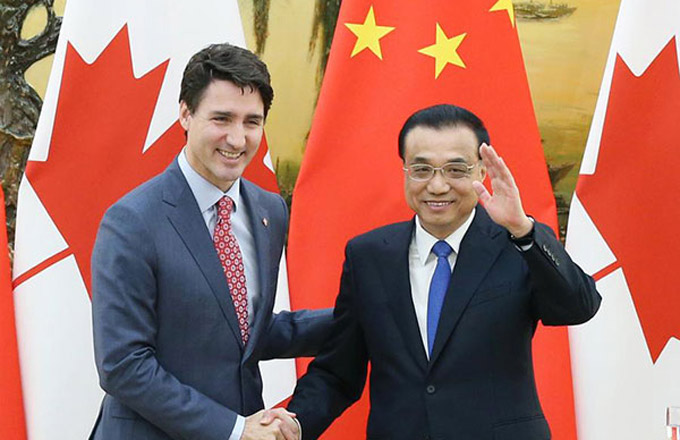
But Abe has earned two more years (than he would have without the election) in office. The fact that the opposition DPJ has not yet recovered from the defeat two years ago, "Abenomics" has not proved totally disastrous, and that he "sincerely requested" to meet with Chinese President Xi Jinping in Beijing last month helped Abe regain some of his lost public trust.
Yet Abe may have taken a risky gamble, because his political career and the well-being of Japanese people both would suffer greatly should his "three arrows" strategy of hyper-easy monetary policy, government spending and reforms continue to produce no results.
Last month, he decided to postpone a second 10 percent tax hike to April 2017, raising concerns about how Japan will cope with its huge public debt. Plus, the election which cost more than 60 billion yen ($510 million) in taxpayers' money amid looming recession, could shave some of his power before he even finishes celebrating his victory.
On the other hand, Abe's tenure for the next four years, along with his probably unchanged Cabinet, could be a concern for many countries, especially China and the Republic of Korea. The first cause for concern is: Will Abe replace the 1995 Murayama Statement, the apology rendered by Tomiichi Murayama, then prime minister of Japan, for the atrocities committed by the Japanese army on neighboring countries before and during World War II, with something else?
Other serious matters of concern are: Will Abe continue refusing to face up to Japan's wartime history? Will he keep trying to amend the peace Constitution to enable Japan to fully exercise the right of collective self-defense?
Yes and no. Judging from Abe's earlier attempts, maybe "yes". But he has very few choices left. His popularity ratings over the past two years have slid each time he has muscled through a security or military agenda, particularly in passing the "Special Secrets Protection Bill" which many consider a latent call to arms.
Besides, given people's demand for improving the economy and livelihoods, the Abe administration will have to be more pragmatic and spend less time trying to amend the Constitution. Even if none of the above problems stand in his way, Abe cannot amend the Constitution unless his coalition wins the 2016 Senate election, by which time "Abenomics" could shatter his dream.
Therefore, the top priority for the Abe administration, plagued by a sagging national economy and mounting doubts, should be to improve relations with Japan's Asian neighbors in the following years. In this effort, Abe, as a right-leaning politician, will hardly be thwarted by Japan's rightist forces if he sticks to the four-point agreement reached with China in November. Of course, Abe can get this added bonus only if he really wants to improve Sino-Japanese ties.
The author is the deputy director of the Institute of Japanese Studies under the Chinese Academy of Social Sciences.