United leadership crucial to a Paris deal
The Paris conference marks the 21st meeting of the Parties of the United Nations Framework Convention on Climate Change. The UNFCCC was adopted in Rio de Janeiro, Brazil, in 1992, but the past two decades of negotiations have been tainted by disputes, distrust, stagnation and pessimism. The Kyoto Protocol, adopted in 1997, was a first attempt to shape global climate governance in a top-down manner, which set a global target of greenhouse gas mitigation and then disaggregated the effort among countries deemed responsible. The need for climate finance and technology transfer was identified with the coordination of the UN.
But in 2001, the US with drew from the Kyoto Protocol, a major setback in efforts to coordinate an international solution since the United States was then the world's largest carbon emitter. A crisis of failure became imminent as several more developed countries followed suit. Although the Kyoto Protocol held together in the end, the climate regime proved unsuccessful in rallying a truly inclusive, global effort to address climate change.
Then, the Copenhagen conference in 2009 was invested with overwhelming expectations, proclaimed by a broad selection of policymakers, scholars, and activists as the last chance to save the world. With Denmark playing host, the European Union worked hard to achieve a new agreement in the style of Kyoto that the media and environmental NGOs demanded be ambitious, fair and legally binding. However, these expectations were not met, with an eleventh hour deal struck without the EU on site. The Copenhagen conference was the last attempt at a top-down approach, a style of global coordination that was doomed to fail because most of the world was not prepared to follow.
The conference and its aftermath provoked a moment of reflection to determine an alternative approach. The Copenhagen Accord is essentially a collection of pledges from individual countries based on their own social and economic circumstances, with a political commitment to limit an increase in global temperatures to no more than 2 degrees Celsius. It was a bottom-up approach with loosely structured commitments and little monitoring, reporting and verification. Nevertheless, significant progress has been achieved under the agreement.
China, for example, is on track to deliver its Copenhagen commitment according to a UN Environmental Programme progress report. Indeed, it could be argued that the Copenhagen Accord achieved no less than the Kyoto Protocol. Moreover, it was the Copenhagen Accord that helped conceive the Durban Platform, which has now led the world to Paris, with its highly anticipated new agreement based on the Intended Nationally Determined Contributions. This is a typical bottom-up approach, and one with significant potential.
In the lead-up to the Paris conference, all major greenhouse gas emitters and the vast majority of the Parties to the UNFCCC have submitted their INDCs that are more ambitious than ever. An approach that is bottom-up and nationally driven, instead of top-down and legally binding, seems to be producing promising results, and has certainly been more embraced by world leaders. A new climate governance system is on the horizon with an anticipated new climate regime in the form of the "Paris Agreement".
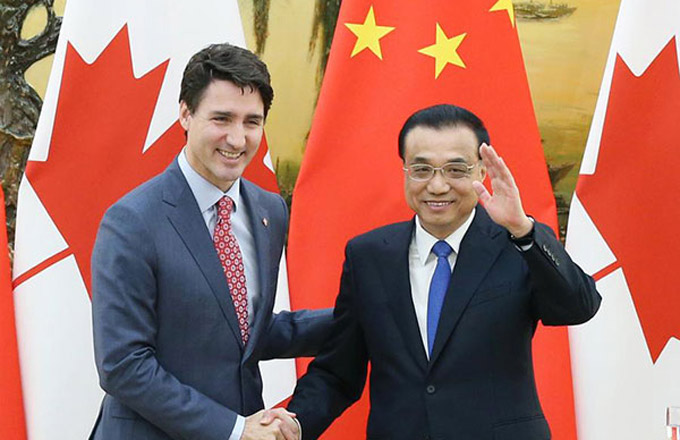
Recognizing the limitations of negotiations at the technical level, many have called for the greater involvement and stronger leadership from political leaders. Two decades of climate talks have taught us an important lesson: that for climate change, the principal challenge for humanity (in the words of Pope Francis), technical negotiations alone cannot succeed. Therefore, the strongest commitment from world leaders is critical to the success of efforts to meet the challenge. The unprecedented number of heads of state and government attending the Paris conference is a symbol of unprecedented commitment from a united leadership on climate change. United leadership has been the key, long-awaited element. Only when political commitments are made will breakthroughs result in technical negotiations. Let us seize the historical opportunity to make a global climate governance work.
Qi Ye is director of Brookings-Tsinghua Center for Public Policy, and Wu Tong is a visiting scholar to Tsinghua University in Beijing.