
中國網(wǎng)站品牌欄目(頻道)
By Charlie Morgan
張晴 注譯
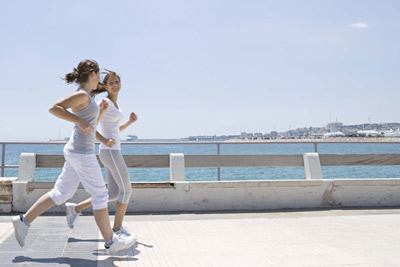
In Canada, when spring comes, many people think about exercise. In winter, our big sweaters can hide a few extra kilograms, but in summer, a T-shirt cannot! There are two main ways to lose weight, to eat less or to exercise more. This story is about exercise which practices some troublesome adverbs of frequency. How do you exercise? Why do you do it? How often do you do it? Do you like it?
A: Hi, how’s everything?
B: Not so good. I went to the doctor for a check up, and he told me I have to eat better and exercise more.
A: It’s important to eat well. Do you eat lots of salads or vegetables?
B: I sometimes eat salads, but not often. However, I eat vegetables almost everyday. Potato chips are made from potatoes; that’s a vegetable, right?
A: That’s not very healthy. Do you take vitamins?
B: I have vitamins at home and I take them off and on, but I often forget.
A: How about green tea? It’s good for your health!
B: I drink it once in a while, but I prefer coffee. Is that healthy?
A: It’s not very nutritious. Maybe you should exercise. It’s good to be active. How often do you exercise now?
B: I never go to a gym. It’s too expensive.
A: Okay, how about running or jogging? How often do you jog?
B: I occasionally run to catch the bus, but not often, maybe once a month.
A: I see. How about walking? How often do you go for a brisk walk?
B: I go for a leisurely walk after dinner when the mood strikes me, maybe twice a month, but I almost never take a long, brisk walk. I have no time.
A: I see. How about swimming? It’s good for you. Do you swim?
B: I used to swim all the time, but now I seldom go swimming, maybe once a year if friends with a pool invite me.
A: How about push-ups or aerobics at home? Do you do that sometimes?
B: Every year, I tell myself to start, but I only do it once in a blue moon, when my jeans get too small, maybe every six months. I use a hula hoop.
A: How about housework? That’s good exercise, too.
B: I clean my house now and then, maybe once a month!
Vocabulary
1. troublesome: 令人煩惱的,困難麻煩的。
2. adverbs of frequency: 表頻率的副詞。
3. gym: 〈口〉健身房,體育館。
4. push-up: 俯臥撐。
5. aerobics: 有氧運(yùn)動(dòng)。
6. hula hoop: 呼拉圈。
Exercise
1. off and on a. sometimes
2. once in a while b. running slow for exercise
3. nutritious c. sometimes
4. jogging d. sometimes, only when I feel like it
5. occasionally e. not regular—sometimes yes, then no...
6. brisk f. not regular, very few times, but not never
7. leisurely g. not many times, rarely
8. when the mood strikes sb. h. food that is nutritious helps your body to
stay healthy or grow properly
9. all the time i. many times, always
10. seldom j. sometimes
11. once in a blue moon k. relaxing, not in a hurry
12. now and then l. quick and full of energy
Answers:
1–e, 2–a, 3–h, 4–b, 5–c, 6–l, 7–k, 8–d, 9–i, 10–g, 11–f, 12–j
Usage Tips
1. 在本對話中,有很多表示“時(shí)間頻率”的詞,如文中出現(xiàn)的once in a while, now and then, occasionally, 它們的時(shí)間頻率都比sometimes(有時(shí))這個(gè)詞要低一些。而once in a blue moon則指“難得有一次,極為罕見”,其中blue moon在口語中是“很長的一段時(shí)間,很久”的意思,如:I haven’t seen you in a blue moon.(我很久都沒看見你了。)另外,如果你想表達(dá)否定的意思,可以用seldom, rarely或not often。
2. leisurely可作形容詞,如:a leisurely walk(悠閑的步行),也可作副詞,如:walk leisurely,但常被當(dāng)作形容詞來用。該詞強(qiáng)調(diào)的是一種輕松自在的感覺,同時(shí)還有一層享受的意味在里面。如:I usually eat breakfast fast, but on Sundays I have a leisurely breakfast. 形容詞brisk的副詞是briskly,是“輕快的,敏捷的”之意,如:a brisk walk(輕快的步伐),a brisk wave(輕快的揮手),a brisk hello (輕快的打招呼);在用該詞形容風(fēng)時(shí),則是指“凜冽的”.,如:a brisk breeze(疾風(fēng))。
(來源:英語學(xué)習(xí)雜志)
 |
 |
 |
 |
 |
 |