Tibetan paper
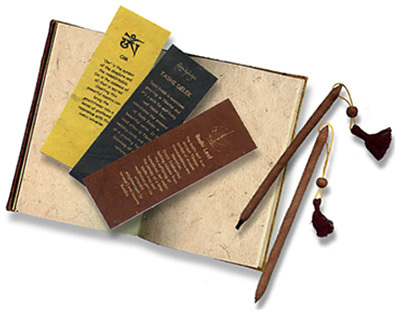
Tibetans began to make paper when Princess Wencheng from the Tang Dynasty (618-907) arrived there more than 1300 years ago, bringing papermaking technology from the mainland.
 |
|
|
From then on, new technologies of nearby ethnic minority groups and local Tibetan materials have been continuously adopted into the Tibetan papermaking process.
The Tibetan paper made from the root of Chinese plant stellera (Radix Stellerae), which contains poisonous ingredients strong enough to keep moth and mice away. It has incredible durability so it remains in a good condition for a long time. That's why it serves as the principal writing material for Buddhist scriptures. The need to print Buddhist lections also pushed the development of traditional Tibetan papermaking. Now, Tibetan papermaking has become a special craft.
 |
|
|
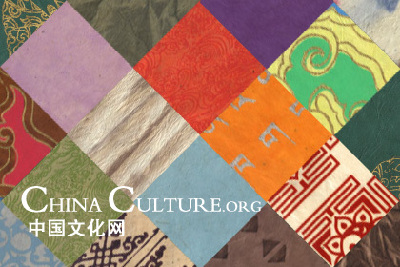
Traditional Tibetan papermaking uses local plants such as Stellera chamaejasme, Chinese Eaglewood Wood, and Cornus controversa. The production of Tibetan papermaking involves boiling cortexes, braizing, rinsing, pestling and airing. The techniques of Tibetan papermaking spread not only within Tibet, but also to neighboring countries such as Nepal and Bhutan.
The technique to make such paper is quite special
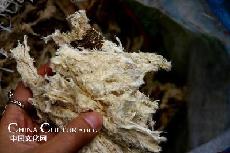
First the crafts people clean the roots and then peel them into three parts - the bark, the inner bark and the soft wooden core.
  |
|
|
All three are raw materials but the inner bark, which has special resilience, is the one that makes the special Tibetan paper valuable to Buddhist scriptures.
Workers then tear the inner bark into small pieces by hand and mix some alkali to make the pulp, which serves to whiten the paper.
 |
|
|
After several times pulping and heating to refine the mixture, the pulp is ready.
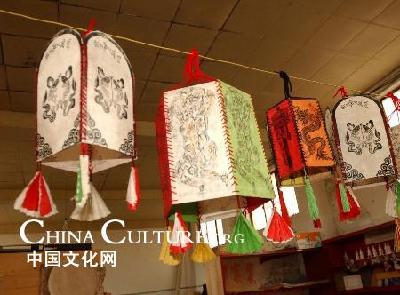
The pulp is placed into the mould and dried in the sunshine, completing the process. The traditional Tibetan paper-making technique flourished as monasteries across the region published numerous Buddhist scriptures.
 |
|
|