Tea sage Lu Yu and his masterpiece of Cha Jing
In the ten chapters of Cha Jing written over a thousand years ago, it covers a series of subjects ranging from tea culture, tea art, tea history, botany, biology, agriculture, medicine, geography, hydrology, pottery, tea farming machinery to tea production.
The text in Cha Jing is surprisingly sparse containing about 55 pages and just over 7000 Chinese characters. This is because Cha Jing was written in a traditional classic literary language called Wen Yan Wen, a highly condensed, refined and poetic styled written Chinese often used by scholars and poets. Unfortunately today there are not many people who fully understand or appreciate this beautiful classic literary language.
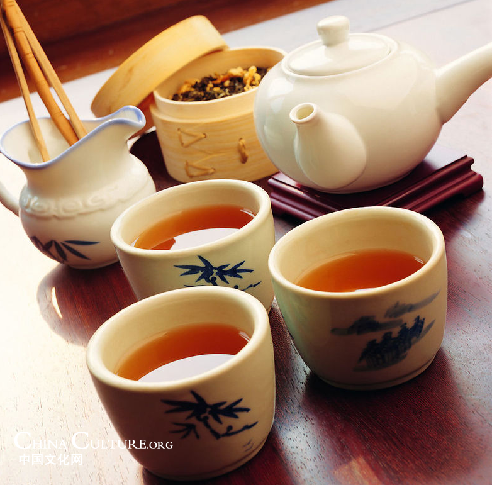 |
Tea in Lu's writing refers to powdered tea, an ancient tea which gave way to loose tea leaves in the 13th century. (The ancient Chinese molded steamed leaves into cakes. To make a brew, the cake was crunched into powder and then boiled.) The book may seem of little practical value to a modern reader, for almost all the listed processes are abandoned in modern green tea production, but owing to Lu's writing - tea has become an independent subject in Chinese culture ever since.
Below is a quick run-down on the contents of each of the 10 chapters in Cha Jing;
Chapter 1. Source of tea.
 |
? The ancient giant tea tree in Bashan Xiachuan area.
? Features and characteristics of tea tree.
? The Chinese character CHA and five other Chinese characters that also mean tea.
? Features and characteristics of quality tea leaves.
? Soil and topography versus tea quality.
? Benefits of good tea and tea to avoid.
? The influence of geographical region, plucking seasons and cultivation methods in relation to tea quality.
Chapter 2. Tools for tea.
?This chapter describes 15 tools and various equipment for cultivation, harvesting, production and processing of tea.
?Tools for making compressed tea brick, construction and recommended materials, specifications and instructions for these tools.
Chapter 3. Tea processes.
? The right time of the day, season and climate for plucking tea leaves.
? Drying and storing of collected tea.
? Texture and features of quality tea brick.
? Understanding process methods and how to identify quality tea brick.
Chapter 4. Tea-ware and Utensils.
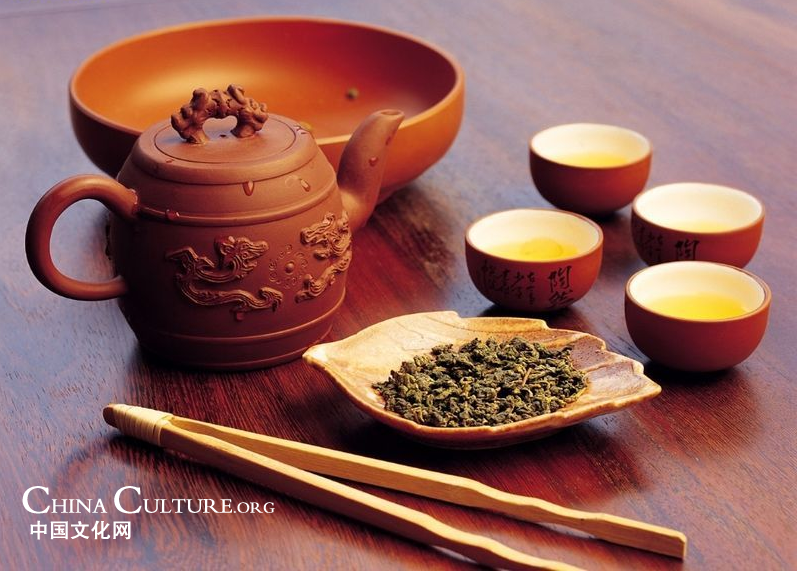 |
? This chapter is a user manual on 25 utensils for brewing tea including specifications and instructions, construction and recommended materials.
? The effect of these utensils to tea brew.