Legend of silk
In the 138 BC and 119 BC, the Emperor of Han Dynasty sent Ambassador Zhang Qian twice to Western Asian Countries. The envoys carried not only silk products to the countries along the Silk Road to promote trade, but also exchanged different cultures with them. Thus, the Silk Road-based trade model was expanded and developed from the Han to Tang Dynasty.
 |
The Silk Road also stretched east to Japan. In AD 107, the Japanese Emperor sent 160 artisans to China to learn silk spinning, breeding and brocading, etc. Afterwards, the artisans went back to Japan with refined silk products and adept skill. In the later centuries, Japanese Emperors sent thousands of artisans to China constantly, who contributed a lot to the silk handicraft development in Japan. The Mikado of 7th Century wore the silk costume with the sun, the moon, stars, mountains and dragon on it, which was similar with the costume of the Chinese Emperor.
The Chinese silk had also surged a hot fashion wave in 18th-19th Century in France. During Napoleon’s period (1799-1814), due to the Emperor’s craziness for luxury and fashion, the celebrities were ordered to wear silk clothing in daily life, which even caused a big shortage of silk products for a period of time in the area of Croix Rousse, the main supply location of silk.
Speaking of the Silk Road, it also included the Silk Road at Sea, which mainly connected China and island countries of South-Eastern Asia and Africa. It started before the Han Dynasty and boomed in Yuan (1271-1368) and Ming Dynasty (1368-1644).
At that time, the Roman Emperors sent ivory, hawksbill and rhinoceros horns to exchange silk and silk products with China through the Silk Road at sea. This also enhanced China’s position and influence both in culture and trade. In other words, silk recorded the development of China’s connection with other countries in the world.
Silk Handicraft
 |
In the Spring & Autumn Period of (770-476 BC), embroidery was maturing. Till the Qin and Han Dynasty (221 BC- AD 220), the skill had improved to a higher level and reached a peak in the Song Dynasty (960-1279) with both outstanding quantity and quality. Especially after the ornamental embroidery was invented, broderie had become part of women’s life and a benchmark of female virtue.
The Silk industry was labeled energetic and practical in Ming and Qing Dynasty (1368-1911). Some big families famous for embroidery emerged and became the mainstay of the social economy at that time. Silk was not only the symbol of art and culture; but also became part of economic development.
Nowadays, although the handicraft has already been replaced by mechanization, the embroidery is well inherited. There are many different famous broderies of different minorities in China, such as Uygur, Yi, Dai, Buyi, Miao, Dong, Bai, Zhuang, Zang. They all add their special esthetic design in the silk broderie, which features the silk products ethnicity and originality.
 |
Silk products have been wildly used in costume and furnishings combining with Chinese painting and calligraphy. This shows a kind of special lively and visually Chinese cultural characteristic.
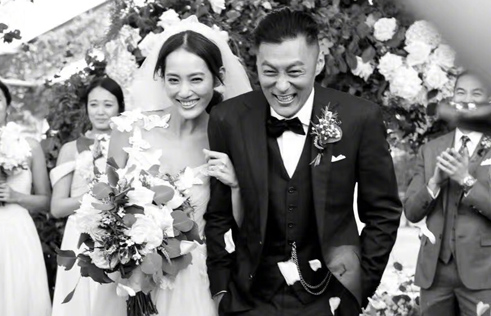
Some young couples choose a silk quilt when they get married. Not only because the festive and propitious design conveys good wishes, but also because the silk quilt can bring the new couple a comfortable and safe new life!
Commended as the “Queen of Fiber”, silk products are composed of natural proteonic fibers, which can provide necessary amino acids that the human body needs. Moreover, the features of softness, smoothness, good breathability and warm keeping help sleep and prevent skin diseases, which makes the silk product the most popular material among many folk.