Changes in nightlife
The arrival and spread of the television totally changed nightlife in the 1980s. In 1966, when the United States entered the "age of color TV," the Chinese mainland had only 12,000 television sets, all black-and-white. For a long time televisions were regarded as luxury items. Only workplaces and a few families had them. Even in the 1980s coupons were required for their purchase, so even having the money didn't guarantee ownership. One exception was those who went abroad. They were entitled to buy imported electric appliances, such as refrigerators, color television sets and washing machines, using "foreign exchange certificates."
"In the early 1980s, the primary school in our village bought the village's first black-and-white television set, causing quite a sensation. Every evening after supper, people gathered in the primary school to watch television. There were only one or two channels, but everyone was fascinated. People could even recite the words of television ads," said He Juncheng, who grew up in a village in Weihai, Shandong Province.
"Though the television signal was poor at that time, causing shadowing or a blurred image, viewers shared the work of getting the best picture. One went out to turn the pole that supported the antenna in order to find the best reception, another called out instructions, and a third fiddled with the dials on the set, until the best possible image came through," He Juncheng continued. In the 1990s cable television was installed in the village, providing perfect reception and many more channels. Almost every household now has its own TV, so there are few cases of families coming together for an evening of viewing.
The 1990s: Bars in the Cities
In the 1990s Western-style dance parties, karaoke halls and video rooms playing Hong Kong and European films became popular new night entertainment venues for young people.
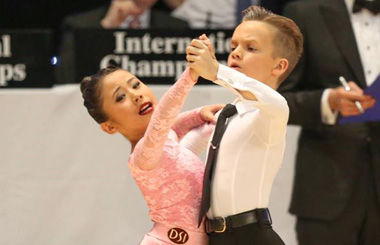
"Students were dancing in the center of the dining hall, and a veteran worker on duty was shouting through the bullhorn, 'mind your manners, students'." This is a scene from the late 1980s at Peking University, described by Wang Meng in a short story. By the 1990s, many universities were running ballroom dance courses, and dance parties became the most important venue for making friends. There were also commercial ballrooms, which in the late 1990s were gradually replaced by discotheques.
The resurgence of bars was the highlight of nightlife in the 1990s. After China adopted the policy of reform and opening-up, coffee and foreign wine entered the Chinese mainland through Hong Kong, initially to large cities such as Beijing, Shanghai and Guangzhou, which had bigger communities of foreigners and Hong Kong businesspeople. Drinking wine became a new fad. "Sanlitun was the symbol of Beijing nightlife in the 1990s. It was a signal for Beijing to shake off its stiffness as a traditional imperial capital and demonstrate the dynamism of a cosmopolis," said Zhang Yiwu, a professor at Peking University. Sanlitun Bar Street, east of downtown Beijing, is near the Embassy District, an area that also features a concentration of foreign businesses.
In the early 1990, a group of bars appeared near Fudan University, in the northeastern corner of Shanghai, quickly becoming well known for their avant-garde décor and music. The walls displayed exotic paintings and graffiti left by customers, and the air shook with rock music. On weekends, foreign students studying in China often gave performances. These bars were inexpensive, attracting many students as well as music lovers. Jazz bars, cropped up too, loved for their music and styles of decor reminiscent of Shanghai in the 1930s and 1940s.
By the end of the 20th century, bars had taken on more functions. They were places to listen to music, watch films, read books, dance, play games, and even hold an art salon.
During the past decade, Chinese people's nightlife has maintained dynamic variety. Traditional operas and dramas have declined, but performances are still presented every now and then. Cinemas are trying their best to lure audiences from their television sets by installing state-of-art equipment and comfortable seats. New modern dramas, songs, dances and operas have been created. Dance parties have largely disappeared, but social dance has become a common form of streetside exercise. Discotheques are still doing brisk business. Bookstores, restaurants and department stores have prolonged their business hours, no longer closing at six o'clock in the evening. Outdoor film shows are still occasionally, and nostalgically, presented in cities and villages free of charge. Internet bars and computer game halls are the new haunts of youngsters.
For "night owls" in contemporary China, the coming of darkness is just the beginning of the day's splendor.