Hui-style architecture
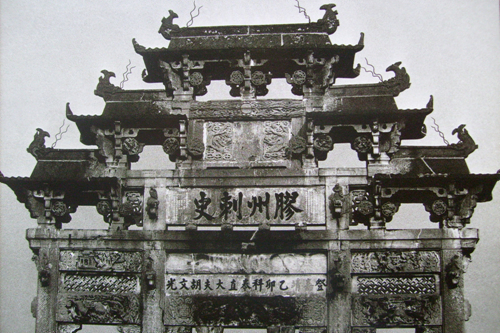
At the foot of picturesque Huangshan Mountain sprawl clusters of grey-tiled and white-walled houses, forming the most typical scene captured in traditional Chinese landscape paintings. It is Hui-style architecture, one of the major Chinese architectural styles of ancient times, with the exquisite homes, ancestral halls and memorial archways as its most impressive embodiments.
 |
Hui architecture developed into a significant school in the Song Dynasty. During the middle period of the Ming Dynasty, gardens and houses constructed with Hui styles developed very quickly along with the prosperity of Hui commerce and the development of its social economy. Hui style soon stepped out from Huizhou and was introduced to big towns along the Yangtze River.
The technical features and style of Hui architecture are mostly put to use in the construction of houses, ancestral temples, joss houses, archways, and gardens. Hui style houses are typically ones with skylights. With a quadrate skylight surrounded by houses from four sides or from left, right and backside, these Hui style houses can reduce the beat of sunshine and enjoy ventilation. All the houses drain off water to the skylight which means fortune will not run off outside, which is called "four sides water returning to the main hall of the houses" by local natives. Hui style houses mainly reflect the mountainous features, geomantic omen, and the beautiful terrain there. The whole show of Hui style houses, built with black tiles and white walls, surrounded by high walls shaped like horse heads (for fireproofing), and harmonized with refined and elegant colors, brings us a strong sense of beauty. These houses are on decorated with artworks made of brick, wood, and stone. As a traditional architecture school, Hui style embodies elegance, conciseness, and magnificence, and still keeps its special artistic favor to this day.
 |
Generally speaking, the exterior appearance of Hui-style buildings differs little while their interior can vary a lot based on the wishes of the owners. Home decor is characterized by three types of Hui carving: stone carving, wood carving and brick carving. The average homeowner would expend less effort on decorating the interior rooms than their facades. The windows and gates facing outward would normally require delicate workmanship, and the gatehouse in particular served as an important banner of wealth and social status, so worthy of the most ornate designs.
To take a look at the Hui architecture, Xidi Village in Yixian County is the best place to go. It is a site of typical Hui residences, and one of the “Ancient Villages in Southern Anhui” that have been collectively listed as a World Cultural Heritage Site by UNESCO. With a history of over 950 years, the village came into being in the Huangyou Period (1049-1054) of the Northern Song Dynasty (960-1127) and had its salad days in the early part of the Qing Dynasty (1644-1911). Historical records suggest that in its heyday it supported a population exceeding 10,000 people and saw the construction of over 40 public buildings, mostly schools and temples, and more than 1,000 dwellings. Today over 240 well preserved residences from the Ming and Qing dynasties still house some 300 households of more than 1,100 residents. The tourist attractions in the village include Lingyun Pavilion, Cishi Archway (or known as the Memorial Archway of the Governor), Taoli Garden, East Garden and the Hall of Respect. These centuries-old structures have made the village a microcosm of traditional Chinese culture and an open-air museum of Ming- and Qing-style residences.