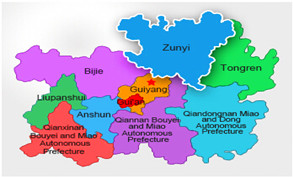
The Chinese government should strengthen its control over financing of green projects in order to help the green economy grow, experts say during an environmental protection forum in Guiyang, capital of southwest China's Guizhou Province.
Ma Jun, economist with the People's Bank of China, the central bank, said there is currently little incentive for green investment in China, so polluting projects enjoy an oversupply of capital while environmentally friendly ones are faced with a severe capital shortage.
The country should build a policy system to direct more investment into the green sector, Ma said at the forum, scheduled to run from Thursday to Saturday. It can consider establishing specialist banks to implement the government's funding of preferential credit terms for green projects, he added.
Besides this policy support, the government can also enhance its control over green financing through legislation, Zuo Xiaolei, chief economist at China Galaxy Securities, suggested.
The development of such financing relies more on government control than market forces, and it should be made obligatory for banks to offer preferential credit terms for green projects, she said.
Financial institutions including banks, securities, insurance and investment companies all pursue maximized profits. That makes them less likely to lend to green enterprises, which usually have higher production costs than polluting industries and are less profitable, especially in the early stages, Zuo noted.
"Many green companies are innovative businesses, and innovation is a long-term investment which usually does not make money in a short period of time," the economist said.
Therefore, government policies are of primary importance in fostering the growth of the green economy by motivating financial institutions to develop green-focused products that do not rely on quick returns, according to Zuo.
China introduced preferential credit terms in July 2007, as part of its enforcement of eco-friendly economic policies, and the country has been working to help solve the financing difficulties of green industries.
On June 26, the Ministry of Environmental Protection set Shandong and Hainan as two pilot provinces where local banks, governments and investment institutions will contribute capital to provide preferential loans to support small enterprises' environmentally friendly projects. The plan is for a total of 12 billion yuan (1.9 billion U. S. dollars) to be given out it credit.
The China Banking Regulatory Commission issued a guideline on such "green credit" in March 2012, urging banks to pay "special attention" to the likely environmental and social impacts of their customers' projects and determine credit ratings and entry and exit terms partly on that basis.
According to Li Junfeng, director of the banking regulatory bureau of Guizhou Province, financial institutions in the province had issued 98.43 billion yuan in loans to 673 energy conservation and environmental protection projects by the end of May.
Li said that, although the banking and financial institutions in Guizhou have gone to great efforts in developing green credit, the growth of the sector is still plagued by many problems such as difficulties in risk assessment for green projects, slow profit growth, high management cost and a lack of compatible stimulus policies.
Gao Xiqing, former general manager of the China Investment Corporation, called on governments of different countries to join hands to lower the cost of new energy.
At the same time, Gao noted that government intervention in this aspect of finance should be limited and follow market rules.
Zuo Xiaolei also urged financial institutions to abandon their maximization of profits and return to their original role of resource allocation, which is not only important to the development of the green economy, but also necessary in avoiding financial crisis.