Insisting on dialogue instead of confrontation
There can be no doubt that the dialogue model promoted by China fits well in the international human rights regime. Choosing dialogue instead of confrontation not only leads to a different tone and format, but also serves a different end. When actors engage in confrontation they try to portray their own position on human rights as the only one which is valid and legitimate. When actors engage in dialogue their aim is to find common ground by developing a mutually acceptable solution. They are willing to give up their own human rights position for the greater good of reaching agreement.
Generally, Western states seem to be strongly attached to promoting their own position and using it as a benchmark to judge others, this comes at the expense of finding common ground, which may explain why some of the human rights dialogues are not very fruitful. This demonstrates that the ambitions are different. While Western states are uncompromising about their own stance on human rights, China is keen on achieving harmony and therefore attaches less value to human rights dogma.
A major advantage of the dialogue model promoted by China is that it serves as a very effective antidote for the legalism which dominates Western human rights discourse. The term "legalism" was coined by the American scholar Judith Shklar to describe an ideology which sees law not as a means but as an end; regards politics as being inferior to the law; associates law with justice and politics with expediency; and regards the law as neutral and objective, while portraying politics as the result of competing interests and ideologies. By embracing legalism, Western human rights experts have put the human rights discourse on legal autopilot. Consequently, more effective ways to protect human rights than by enforcing them in courts of law are no longer part of the debate.
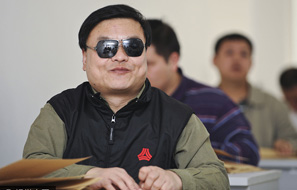
The author is professor of cross-cultural law and human rights, Utrecht University, and director of the Cross-cultural Human Rights Centre. The article is an excerpt from his paper: "Contesting through compliance: How China can gain more support for its human rights positions."
Serges Djoyou Kamga
Respecting the cultural realities of different nations
In order to transform the current discourse on "universal" human rights into an international one, BRICS nations should stand by each other in global forums. In other words, they should advance BRICS' position rather than their own individual interests.
In this regard, during sessions at the UN General Assembly, the UN Human Rights Council, and various UN committees, the BRICS nations should advance the need to rely on local realities to promote and protect human rights. In this vein, they should rally their influence to seek consensus with emphasis on the need to refrain from using the word "violation" and other inflammatory language, so as not to threaten the goal of reaching agreement and the need to respect various worldviews on human rights.
It was the intention of the drafters of the Universal Declaration on Human Rights to reach consensus between various approaches to human rights. As the Chinese representative P.C. Chang indicated, the process was meant to bring together the strong points of different civilizations deserving of the widest support possible.
In addition, the necessity to advance others' cultures and traditions in protecting human rights should be regularly on the agenda. For instance, under the leadership of South Africa which is a BRICS nation, African countries should be able to request reliance on ubuntu, the belief in a universal bond of sharing that connects all humanity, as a moral theory to advance human rights. In this perspective, states should be able to enumerate what is done under ubuntu as an additional step taken to supplement legislative and policy measures to give effect to human rights.
In the same vein, besides highlighting legal and policy measures, China should be able to underline measures informed by Confucianism to foster human rights in China.
This approach would help in addressing the politicization of human rights characterized by the fact that the decision of who is a violator of human rights is not always objective. In addition, this would create room for cultural processes at the national level before a country's sovereignty is violated in the name of human rights.
Ultimately, BRICS should push for the consideration of cultural realities in seeking solutions for respect for human rights. Far from pushing for relativism of human rights, the BRICS' actions should be informed by the need to rely on local realities to give effect to the so-called "global" standards of human rights. In fact, local realities should supplement current mechanisms.
The author is a professor at the Thabo Mbeki African Leadership Institute at the University of South Africa. The article is an excerpt from his paper: "BRICS, International cooperation and Southern Perspectives to the Human Rights Discourse: Some reflections."




Copyright 1995 - . All rights reserved. The content (including but not limited to text, photo, multimedia information, etc) published in this site belongs to China Daily Information Co (CDIC). Without written authorization from CDIC, such content shall not be republished or used in any form. Note: Browsers with 1024*768 or higher resolution are suggested for this site.
License for publishing multimedia online 0108263 Registration Number: 130349