OPINION> Commentary

|
OPINION> Commentary
|
|
Returning to 'normal' is no longer an option
By Dominic Waughray (China Daily)
Updated: 2009-01-16 07:40 We know that last year would go down in history as a bad year for the world economy. In the first half of the year, volatile commodity prices, especially for food and oil, hit the world's poorest people hard. In the second half was the global financial catastrophe. Yet, could the crises of food, fuel and finance that we experienced last year simply be three canaries in the coal mine? What if these are just the early warning signals that our current economic system is not sustainable at a much deeper level? The World Economic Forum convened over 700 international experts in Dubai, last November to discuss the world agenda for this year. Among them were over 120 leading experts in environment, sustainability and human security. Their conclusions were startling. We actually face an environmental security problem that is deeper, more fundamental, more complex and much more systemic than the financial crisis. Last year could merely be the precursor to a perfect economic storm, the like of which we have never seen before. For the past 50 years we have amassed unprecedented financial wealth, but we have also chronically underpriced risk in terms of our natural resource base. We have financed our extraordinary growth in aggregate living standards by systematically under-pricing the goods and services we derive from our planet's natural resources, the negative externalities we create by polluting them, and the future risks we face from our cumulative depletion and degradation of them. Those of us in middle age today in richer countries are the third successive generation to benefit from the natural resource bubble that our first world economy has exploited since the mid-20th century. It is highly unlikely - unless we make some deep, structural changes to how we manage our economy - that our children and their children will experience the same sense of progress and wealth. Here are just a few chilling observations from the experts who met in Dubai, which link the natural resource challenge to the future security of our economy and global society: If present trends continue, nearly 4 billion people will live in areas of high water stress by 2030. As we try to feed and fuel a growing and a more affluent world, the water situation shows every sign of getting much worse. Simply augmenting water supply is no longer possible in most places - historical approaches to water use will not work in the future. The International Energy Agency (IEA) predicts an expansion in world energy demand of 45 percent by 2030, with coal accounting for more than a third of this overall rise, 87 percent of this increase will come from countries outside the Organization for Economic Cooperation and Development where energy poverty is currently highest. The IEA say these energy trends are "patently unsustainable, economically, environmentally and socially". A new energy paradigm for both developed and developing countries is urgently required. The world will need to double food production in the next 40 years to meet projected demand. Among the poorest today, over 1 billion people - one-sixth of the world's population - do not have access to adequate food and nutrition. Our ability to meet current and future production needs is seriously challenged by increasing water scarcity, climate change, and volatile energy costs and supplies. Unless we change how we do it, we will not be able to supply our future food needs. Humanitarian assistance will increase to unprecedented scale if, as commentators foresee, large-scale migration results from climate change and water scarcity. The International Red Cross estimates that there are 25-50 million climate change refugees already, compared to the official refugee population of 28 million. The Intergovernmental Panel on Climate Change suggests that 150 million environmental refugees could exist by 2020. Currently in international law there is no such thing as an environmental refugee. The Global Risks 2009 report from the World Economic Forum reinforces the scale of this challenge. Economic build-back strategies that follow the same industrial trajectory as before will not bring the resilience that is needed for long-term job creation, wealth generation and sustained economic growth into the future. Oil prices will rise, commodity prices will become more volatile and energy, food and water security issues will grow.
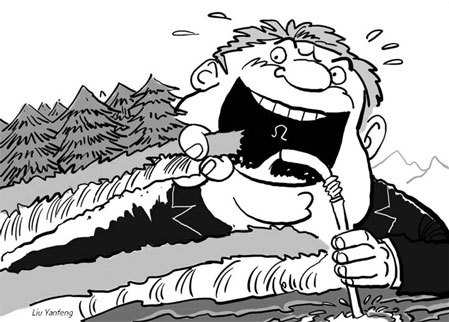 We will breach the emissions limits scientists tell us that we must keep within if we are to avoid dangerous climate change, with dramatic economic - and humanitarian - consequences for us all. It seems that the world can ill afford to "return to normal". The financial crisis gives a stark warning of what can happen if known economic risks are left to fester. These fundamental environmental risks need to be addressed if we are to survive and thrive. We should not see this as the same old environmental story of conservation or protection. We want economic growth. But we need a new and progressive risk management agenda to help improve the lives of everyone who participates in tomorrow's global economy. Managed smartly, and private sector innovation and entrepreneurialism in the global interest will turn these risks into opportunities for new wealth and value creation. In this context, arguably the most serious World Economic Forum Annual Meeting in years will be held in Davos, Switzerland, late January. More political, business and civil society leaders than ever before are due to take part. The demand for a fundamental conversation about the future of the global economy, among those who shape the world agenda, is clear. The Dubai meeting of experts ensured that discussions at Davos must address how the world system should be reshaped, not only for recovery in the short run, but also to mitigate fundamental sustainability risks and promote new sustainable growth opportunities in the longer run. This is a very pertinent discussion for this year. In December, a follow-on treaty to the Kyoto Protocol on climate change is scheduled for negotiation. Can the plans for world economic recovery be linked to the jobs, skills, investment and technology opportunities that a global low carbon economy requires, if climate change is to be managed successfully? In these unprecedented times can government and business leaders forge a new coalition to develop a set of practical global actions, which can stimulate economic growth in the short run and create the foundations of a more sustainable, low carbon economy for the longer run? Last year gave us the stern warning that current trends cannot be continued. We must read these warnings. We face a perfect economic storm if hidden sustainability challenges catch up with our so called real economy challenges. Can this year be the year when we find innovative new collaborations to help shape the postcrisis world? We must, as returning to "normal" is not an option. The author is head of Environmental Initiatives, World Economic Forum (China Daily 01/16/2009 page9) |
