OPINION> Commentary

|
OPINION> Commentary
|
|
Housing prices choke spending
By You Nuo (China Daily)
Updated: 2009-01-19 07:35
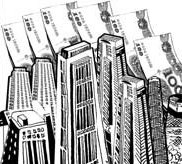
People tend to blame China for its low consumer spending - as a problem for both the world and the country itself. Of course, China has been exporting perhaps too much. At a time of worldwide crisis, there is for the time being little room for more exports. Of course, the Chinese should spend more at home so as not to keep accumulating the US treasury bills in such a suicidal way - in which the debtor does not seem to appreciate while the creditor is exposed to increasing risk. But China's low consumption ratio - consumption in proportion to its total GDP (only 40 plus percent) - is nothing strange in its market system. Its consumption level is low because it is faced by several very unique problems that are yet to be sorted out. One of the problems, and perhaps the most crucial one, is urban housing. The global financial crisis has now pushed China to the crossroads where those problems will have to be addressed more seriously - even though their immediate solutions still remain unlikely. First, let's see if the Chinese were willing to spend more, and were indeed trying to do so, where their money would go. Lots of their spending would have been collected by the land developers and municipal government departments in charge of land use. A casual look at the most expensive buildings in a city and who own them will tell to a great extent of the consumption pattern in this country today. There is little doubt that the winners of the game so far are the land developing companies and local economic/fiscal authorities. Urban housing price has skyrocketed in nearly all cities, while the young workers and office employees have little access to affordable housing and mortgage policies. But these people are the bulk of China's rising middle class. If they cannot buy their homes - and if, as some economists dangerously suggest, they are left living in rented housings for a considerably longer period in their lives than their counterparts in Western countries, then China's consumption level, along with its consumer credit, would hopelessly remain under-developed.
The urban housing challenge would become even more serious, if, considering the nation's trend of development, another 200-300 million people migrate into the cities in the next three decades. The imbalance in the urban housing development - and all related services - has become one of the main factors to hold back China's urban development and consumption level. A poorly managed housing market's dampening effect on the whole economy can be multifaceted and should never be underestimated. However, at the moment, China still does not have a workable plan for its urban housing market. Regulating the overall price, which the government has been attempting since 2004, has not helped the new middle class. While the financial crisis is driving away many migrant workers from the cities and hurting the rental income for the older middle class who bought their private houses in the earlier stage of the economic reform. But why should there not be an affordable housing program - independent from the rest of the housing market, such as housing for commercial and investment purposes? Why should there not be easily accessible housing and mortgage choices to help the new middle class? Why should there not be more regulation focusing on the supply of affordable housing for the first-time low-income homebuyers rather than, policing all prices? Why should there not be a national program, directly supervised by the central government in Beijing, to coordinate affordable housing supplies with the appropriate credit supplies? China is making many plans to stimulate its economy - from the iron and steel industry to the machine-building industry. But those industries do not directly generate consumer spending. Therefore one more plan is badly needed - one that is to both reform and stimulate its housing market. E-mail: younuo@chinadaily.com.cn (China Daily 01/19/2009 page4) |