China has been criticized by some countries for making "ambiguous" claims on the islands, islets, reefs and waters in the South China Sea. For example, it has been criticized for "failing to honor" the United Nations Convention on the Law of the Sea despite being a signatory to it, as well as for "violating" other international laws on the sea.
A few international observers also accuse China of deliberately obscuring its territorial claims in the South China Sea by using terms not found in the UNCLOS, such as "adjacent waters" and "relevant waters". And some countries keep demanding that China "clarify" its nine-dash line map.
The fact is that, if these countries do not change their mindset and attitude, the nine-dash line will continue to be vague for them irrespective of how clearly China defines it.
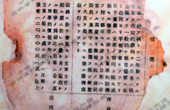
China has an unequivocal and consistent territorial claim on the islands and other land features in the South China Sea. As a matter of fact, it has unequivocally stated its claim in three official documents: the 1947 Location Map of the South China Sea Islands released by the Kuomingtang government in Nanjing, the 1958 Declaration of the Government of New China on the Territorial Sea and the 1992 Law on Territorial Sea and Contiguous Zone. These documents state that the Dongsha Islands, Xisha Islands, Zhongsha Islands, Nansha Islands and other islands are part of the sovereign territory of China.
Some countries view China's maritime claim in the South China Sea as ambiguous because of certain historical reasons. The first reason is that the UNCLOS does not properly address the issue of historic rights. Despite the reference to historic title in Articles 15 and 298(1)(a), the provision on historic bays in Article 15(6), and the recognition of traditional fishing rights in Article 51, it does not have any provision for the definition of historic rights or their specific connotation and denotation.
The second is that no consistent understanding has been reached in international law on historic rights. For example, Yehuda Z. Blum, an Israeli professor of law and diplomat, has observed: The term "historic rights" denotes the possession by a state, over certain land or maritime areas, of rights that would not normally accrue to it under the general rules of international law, such rights having been acquired by that state through a process of historical consolidation ... Historic rights are a product of a lengthy process comprising a long series of acts, omissions and patterns of behavior which, in their entirety, and through their cumulative effect, bring such rights into being and consolidate them into rights valid in international law.


Copyright 1995 - . All rights reserved. The content (including but not limited to text, photo, multimedia information, etc) published in this site belongs to China Daily Information Co (CDIC). Without written authorization from CDIC, such content shall not be republished or used in any form. Note: Browsers with 1024*768 or higher resolution are suggested for this site.
License for publishing multimedia online 0108263 Registration Number: 130349