Asia-Pacific countries continue to drive the global economy. The region has demonstrated great resilience during the economic and financial crisis, contributing about 70 percent of world growth from 2008-2011.
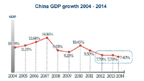
Yet regional growth is now in a challenging phase. The 2014 Economic and Social Survey of Asia and the Pacific, the flagship publication of the United Nations Economic and Social Commission for Asia and the Pacific, forecasts a third successive year of growth below 6 percent in Asia-Pacific developing economies. However, this conceals a wide variation in performance among some major developing economies, ranging from a 7.5 percent growth forecast for China to just 0.3 percent for the Russian Federation in 2014.
Regional growth dynamics are being influenced by the anemic recovery in the developed world given the weak implementation of policy responses. Yet overcoming domestic structural impediments is also vital. Widespread poverty, rising inequality, social inequity and environmental degradation are hurdles to be cleared before the region can set itself on the fast track to high growth which is stable and inclusive.
ESCAP's research highlights new evidence on the nature of these challenges. On the external front, the ongoing normalization of monetary policy by the US Federal Reserve poses continuing challenges for developing Asia-Pacific, but these can be mitigated by stronger macro-prudential policies and flexible exchange rate management. Financial volatility is of concern to India, Indonesia, Malaysia, the Russian Federation, Thailand and Turkey, where annual growth could decline by between 0.7 and 0.9 percent.
If the G20 continues to delay implementation of its standstill commitments on trade protectionism, it will have an impact on the Asia-Pacific region's export growth. Trade restrictions have already deprived the region of an estimated $255 billion in opportunities to exports goods between 2009 and 2013, accounting for more than 1.6 percent of regional GDP.
On the domestic side, growth will remain jobless if countries do not implement labor market programs that effectively align and strengthen education, training and skills with the requirements of employers. From 2009 to 2013, employment grew by only 1.3 percent, compared with average GDP growth of 6.4 percent in developing Asia-Pacific economies.
Without adequate social protection systems, quality education, better access to credit and land, as well as stronger labor market institutions, developing countries will be unable to tackle high and rising inequality. Since the 1990s, regional inequality as measured by the Gini coefficient has risen from 29.9 to 36.8. The wealth of 0.001 percent of the Asia-Pacific population is 17 times greater than the combined GDP of 12 least developed countries in the region.


Copyright 1995 - . All rights reserved. The content (including but not limited to text, photo, multimedia information, etc) published in this site belongs to China Daily Information Co (CDIC). Without written authorization from CDIC, such content shall not be republished or used in any form. Note: Browsers with 1024*768 or higher resolution are suggested for this site.
License for publishing multimedia online 0108263 Registration Number: 130349