|
|
Missile frigate Yuncheng launches an anti-ship missile during a military exercise in the water area near South China's Hainan Island and Xisha islands, July 8, 2016. [Photo/Xinhua] |
The South China Sea arbitral tribunal in The Hague has made its award in the Philippines' case. As pointed out by many, the tribunal was willed to extend ill-founded jurisdiction over this case.
As per design, the international tribunal doesn't qualify to judge maritime rights based on their sovereign nature. The case that Manila raised against Beijing touches upon various issues where sovereignty is at stake, as such, the court has willfully and erroneously expanded its turf and thus made an unlawful ruling.
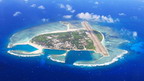
Even worse, this tribunal has been ill intended to promote the Philippines' unwarranted national interests. For instance, the court has ruled that Taiping Island of the Nansha Islands doesn't really constitute a "legally qualified island", contradicting the simple fact that people have been living on the island, largely self-sufficiently, for a long time. The argument that there is no evidence that a "human community" had long been formed there, a precondition to establishing Taiping as an island, sounds absurd to Chinese, on both the mainland and in Taiwan. Such a conclusion seriously reduces the traditional Chinese fishing grounds, especially for those fishermen from Taiwan, and hence will aggravate, rather than help reduce, the fishing disputes in the region. Such arguments indicate the tribunal has not had any proper sense of justice and fairness.
The ruling essentially declares China's Nine-Dash Line invalid. Such a line emerged well before the 1982 United Nations Convention on the Law of the Sea was born, and registered China's historic southern maritime rights before contemporary international maritime law came into being. When China joined the UNCLOS in the 1980s and ratified the convention in 1990s, it retained the Nine-Dash Line to indicate these rights.
Every multilateral international agreement suits some countries but not others. The United States has a problem with the seabed chapter of the convention, so it joined the convention without ratifying it. Despite the international effort to revise the convention in the 1990s for the sake of the US, it has yet to ratify the document. The convention also poses a challenge to China-given China's rather limited per capita exclusive economic zone. Joining the convention while retaining its historic claims through the Nine-Dash Line became Beijing's pragmatic approach toward the convention, which itself was a complex compromise of all parties.
On the one hand, expecting China to join the regime in full compliance with the convention would seriously reduce China's per capita exclusive economic zone.
On the other, pushing the envelope too far would force Beijing to reevaluate the cost effectiveness of being party to the convention. A successful international regime requires both the principle of rule of law and willingness for reconciliation among various stakeholders to boost the regime rather than to tear it apart.
China has employed such an approach of participation and consultation to both make the regime cohesive and to reconcile its differences with counter-claimants. This becomes more relevant when a large number of those islands and reefs on its side of the Nine-Dash Line have been already seized by some of the other claimants since the 1970s. Since the overall balancing of the sovereignty and economic rights of relevant claimants are so complicated, a simplistic ruling from the tribunal will hardly work. It is for this reason China has maintained its preference to resolve the disputes through negotiations.
The tribunal's rigid ruling has achieved no balancing. This is because as far as sovereignty is concerned, the tribunal has not been designed to settle disputes. Under such circumstances, any mechanical application of the convention will yield unreasonable and unlawful decisions.
Those who have played this dangerous game have unnecessarily raised the temperature in the South China Sea. China's response has been firm and consistent-the ruling by the tribunal is unlawful and will not be accepted. China still welcomes direct talks with claimants on mutual concessions for mutual benefits.
The author is a professor and associate dean at the Institute of International Studies, Fudan University.



Copyright 1995 - . All rights reserved. The content (including but not limited to text, photo, multimedia information, etc) published in this site belongs to China Daily Information Co (CDIC). Without written authorization from CDIC, such content shall not be republished or used in any form. Note: Browsers with 1024*768 or higher resolution are suggested for this site.
License for publishing multimedia online 0108263 Registration Number: 130349