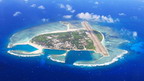
The State Council Information Office of the People's Republic of China on Wednesday published a white paper titled "China Adheres to the Position of Settling Through Negotiation the Relevant Disputes Between China and the Philippines in the South China Sea".
Following is the full text of the white paper:
CONTENTS
Introduction
I. Nanhai Zhudao are China's Inherent Territory
i. China's sovereignty over Nanhai Zhudao is established in the course of history
ii. China has always been resolute in upholding its territorial sovereignty and maritime rights and interests in the South China Sea
iii. China's sovereignty over Nanhai Zhudao is widely acknowledged in the international community I
I. Origin of the Relevant Disputes Between China and the Philippines in the South China Sea
i. The Philippines' invasion and illegal occupation caused disputes with China over some islands and reefs of Nansha Qundao
ii. The Philippines' illegal claim has no historical or legal basis
iii. The development of the international law of the sea gave rise to the dispute between China and the Philippines over maritime delimitation
III. China and the Philippines Have Reached Consensus on Settling Their Relevant Disputes in the South China Sea
i. It is the consensus and commitment of China and the Philippines to settle through negotiation their relevant disputes in the South China Sea
ii. It is the consensus of China and the Philippines to properly manage relevant disputes in the South China Sea
IV. The Philippines Has Repeatedly Taken Moves that Complicate the Relevant Disputes
i. The Philippines attempts to entrench its illegal occupation of some islands and reefs of China's Nansha Qundao
ii. The Philippines has increasingly intensified its infringement of China's maritime rights and interests
iii. The Philippines also has territorial pretensions on China's Huangyan Dao
iv. The Philippines' unilateral initiation of arbitration is an act of bad faith
V. China's Policy on the South China Sea Issue
i. On the territorial issues concerning Nansha Qundao
ii. On maritime delimitation in the South China Sea
iii. On the ways and means of dispute settlement
iv. On managing differences and engaging in practical maritime cooperation in the South China Sea
v. On freedom and safety of navigation in the South China Sea
vi. On jointly upholding peace and stability in the South China Sea
Introduction
1. Situated to the south of China's mainland, and connected by narrow straits and waterways with the Pacific Ocean to the east and the Indian Ocean to the west, the South China Sea is a semi-closed sea extending from northeast to southwest. To its north are the mainland and Taiwan Dao of China, to its south Kalimantan Island and Sumatra Island, to its east the Philippine Islands, and to its west the Indo-China Peninsula and the Malay Peninsula.
2. China's Nanhai Zhudao (the South China Sea Islands) consist of Dongsha Qundao (the Dongsha Islands), Xisha Qundao (the Xisha Islands), Zhongsha Qundao (the Zhongsha Islands) and Nansha Qundao (the Nansha Islands). These Islands include, among others, islands, reefs, shoals and cays of various numbers and sizes. Nansha Qundao is the largest in terms of both the number of islands and reefs and the geographical area.
3. The activities of the Chinese people in the South China Sea date back to over 2,000 years ago. China is the first to have discovered, named, and explored and exploited Nanhai Zhudao and relevant waters, and the first to have continuously, peacefully and effectively exercised sovereignty and jurisdiction over them. China's sovereignty over Nanhai Zhudao and relevant rights and interests in the South China Sea have been established in the long course of history, and are solidly grounded in history and law.
4. As neighbors facing each other across the sea, China and the Philippines have closely engaged in exchanges, and the two peoples have enjoyed friendship over generations. There had been no territorial or maritime delimitation disputes between the two states until the 1970s when the Philippines started to invade and illegally occupy some islands and reefs of China's Nansha Qundao, creating a territorial issue with China over these islands and reefs. In addition, with the development of the international law of the sea, a maritime delimitation dispute also arose between the two states regarding certain maritime areas of the South China Sea.
5. China and the Philippines have not yet had any negotiation designed to settle their relevant disputes in the South China Sea. However, the two countries did hold multiple rounds of consultations on the proper management of disputes at sea and reached consensus on resolving through negotiation and consultation the relevant disputes, which has been repeatedly reaffirmed in a number of bilateral documents. The two countries have also made solemn commitment to settling relevant disputes through negotiation and consultation in the 2002 Declaration on the Conduct of Parties in the South China Sea (DOC) that China and the ASEAN Member States jointly signed.



Copyright 1995 - . All rights reserved. The content (including but not limited to text, photo, multimedia information, etc) published in this site belongs to China Daily Information Co (CDIC). Without written authorization from CDIC, such content shall not be republished or used in any form. Note: Browsers with 1024*768 or higher resolution are suggested for this site.
License for publishing multimedia online 0108263 Registration Number: 130349