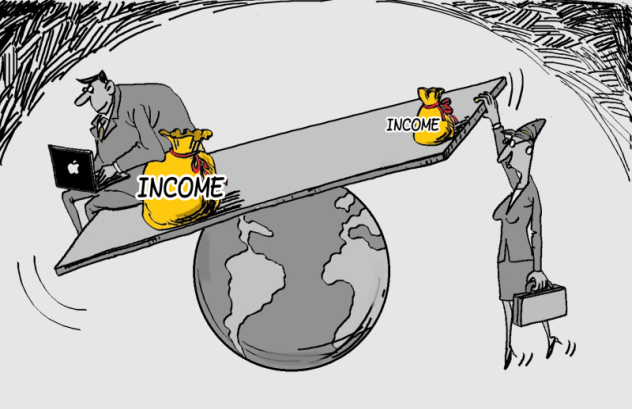
Elections reflect spread of globalization fears
 |
|
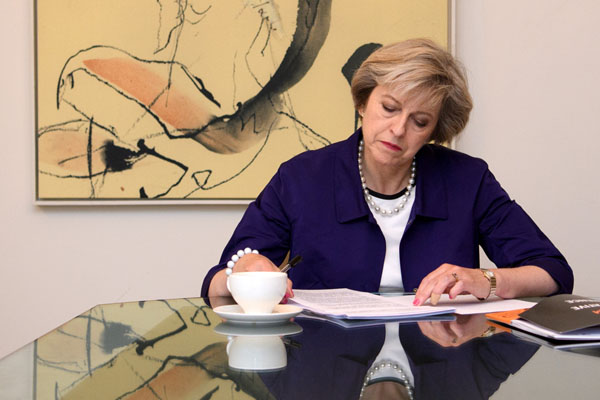
British Prime Minister Theresa May sits in her hotel room as she prepares her conference speech. [Photo by Carl Court/Reuters] |
The Brexit vote in Britain, Donald Trump's victory in the United States and the likelihood of further electoral upsets in other countries in the coming year reflect widespread discontent in the West over the benefits of free trade and globalization being unevenly distributed.
Among the targets of disgruntled voters on both sides of the Atlantic are a widening income gap, the rise of international elites to whom the laws of economics do not seem to apply, and what they see as the machinations of nefarious foreigners buying up industries and snapping up jobs.
Part of Trump's electoral appeal was an "America first" policy that appealed to voters in the old industrial Rust Belt states by directly blaming China for destroying the local economy.
It is a political atmosphere in which even the most free trade politicians must at least nod in the direction of protectionism or face the electoral consequences.
With unplanned irony, UK Chancellor of the Exchequer Philip Hammond announced in Parliament last month that his cash-strapped government would plow funds into helping high-tech startups avoid being taken over by foreign companies. He was perhaps unaware that the very next day China's travel services provider Ctrip would announce it was spending £1.4 billion ($1.7 billion) to buy Scotland-based Skyscanner. The travel price comparison website exactly fit the profile of the so-called unicorn companies that Hammond said he wanted to protect.
On the morning the deal was announced, British Prime Minister Theresa May said foreign takeovers of UK companies would in the future be examined to determine whether they were in the national interest.
May's government is not about to slam the door on foreign acquisitions, though. The UK can hardly afford to turn down foreign investment at a time when it is struggling with the consequences of a vote to leave the European Union.
The so far mild embrace of at least some aspects of protectionism has not been confined to the UK, however. Ahead of a visit to China this month, German Vice-Chancellor Sigmar Gabriel said it was not right that "Germany sacrifices its companies on the altar of free markets, while at the same time our own companies have huge problems investing in China."
Gabriel was reflecting popular concerns in Germany where Chinese investment funds bought up some 40 local companies in the first half of 2016. That was part of a €72 billion Chinese investment in the whole of the EU in the same period.
In October, the signing of a free trade treaty between the EU and Canada was delayed because of objections from the Belgian province of Wallonia, which demanded protection for local farmers and businesses.
European industrial leaders have expressed fears that, if Trump presses ahead with his threat of punitive tariffs on Chinese imports to the US, China could respond by boosting exports to Europe, in turn prompting the EU to erect its own protectionist tariff barriers.
It is certain that, in private, many Western politicians recognize that inward-looking trade and investment policies would probably damage rather than improve the livelihoods of voters who have been encouraged to reject globalization. But in the face of the populist rhetoric from those like Trump and would-be leaders waiting in the wings in Europe, such as France's Marine LePen, candidate of the right-wing National Front, free trade supporters are on the defensive.
There are many who challenge the prevailing trend toward protectionism, but their voices are not getting through. Those in the US who say the domestic manufacturing sector has been enjoying record production levels, and that most job losses were the result of automation, rather than overseas competition, were drowned out by the simple refrain that foreigners were to blame.
China's policymakers can only sit back and contemplate how the Western trend will evolve and to what degree it will impact the domestic and global economies. In a restatement of the so-called "Go Out" policy, State officials said in Shanghai this week that China would continue to encourage the healthy development of outbound investment.
The writer is a senior editorial consultant for China Daily UK.