Globalization without discontents
 |
|
CAI MENG/CHINA DAILY |
Populism and protectionism are on the rise across the world. Some recent developments in Europe and the election of Donald Trump as US president seem to have added strength to the voices opposed to globalization. These are huge challenges confronting the world. What makes these challenges more complicated is the quality and complexity of global interdependence today.
Advances in information and communications technology, transportation, the development and spread of nuclear weapons, and the degradation of the global environment have made the world more interdependent than ever before as well as more vulnerable.
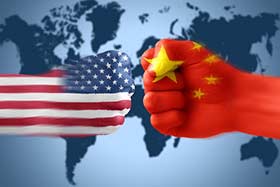
These global challenges cannot be overcome without the efforts of all parties, for which multilateral negotiations and efficient global institutions are necessary. And no issue, whether it be climate change, nuclear proliferation, cybersecurity or global trade, can be resolved without Sino-US cooperation.
After the end of the Cold War, the United States emerged as the dominant economic and political power. But its position has been eroding with the rise of emerging economies, especially China, with the shifting global balance of power triggering a debate on China and the world order.
The US principles on security, global trade and politics are no longer universally accepted, and global issues cannot be resolved through consensus due to the differences in American and Chinese approaches to tackling the issues.
Since 2008, the significant role played by China in G20 indicates the country's increasing importance in global governance. China emphasizes the necessity of multilateral approach to issues, and respects national sovereignty and the principle of noninterference in a country's internal affairs, which have helped it greatly benefit from globalization.
And although China has not yet formulated a clear strategy for its role as a rising global power and its commitment to global causes, the principle that will define its engagement with the world is multilateral cooperation.
The Trump administration, on the other hand, seems to be limiting the US' global role, which marks a departure from decades of consensus that Washington's leadership is indispensable to international stability. Trump has criticized globalization, which he believes is the key reason for the US' troubles. He believes that bilateral cooperation among major powers, rather than regional and multilateral cooperation, can "Make America Great Again". And he considers the European Union as an antediluvian economic model and has pulled the US out of the Trans-Pacific Partnership agreement. All these suggest global affairs do not occupy center stage in Trump's scheme of things.
Therefore, the US is not likely to help design policies for the stability of the world economy. Instead, Trump will focus more on American interests. In fact, Washington seems to be resorting to protectionism, bilateralism and unilateralism, and is least interested in fulfilling former US president Barack Obama's promise to help reform international institutions. But that does not mean Washington will fully abandon the multilateral architecture that it has dominated since the end of World War II.
In this context, the China-led Belt and Road Initiative and Asian Infrastructure Investment Bank should be seen as an attempt to help improve global economic governance. As a rising global power, China is still on the learning curve. So it is crucial for China and the US both to recognize each other's priority areas, common interests, and differences. And they should make concerted efforts to capitalize on the common interests and settle the differences before they turn into conflicts.
Despite their differences over the future of globalization and divergent views on global issues, both sides accord the highest priority to economic growth and sustainability, for which good global economic governance is an absolute necessity.
An updated narrative on globalization and global governance is therefore a prerequisite for global economic prosperity. Shared interests without substantial understanding of the priorities and challenges will make cooperation and coordination in global economic governance inefficient and fruitless. And this calls for the two great powers to step out of their "discourses" and settle their differences for the betterment of the global economy.
The author is a research fellow at the School of International Relations, Sun Yat-sen University.