Once isolated, Guizhou is now 'a gem'
Updated: 2013-07-16 17:40
By Raymond Zhou (China Daily)
|
|||||||||||


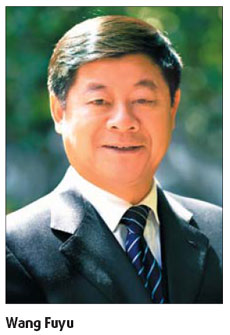
Wang Fuyu's eyes sparkle talks about tourism in Guizhou province. The deputy secretary of the Communist Party of Guizhou fires off a string of data, the most striking of it a 58 percent growth rate in tourism revenue for the first half of this year.
A year ago, when he was asked similar questions about tourism, he admitted with worry that tourism had dropped precipitously as a result of the Sichuan earthquake.
But the recovery has been just as remarkable. Total revenue from tourism for the first half of 2009 totaled almost 40 billion yuan. As late as 2007 the industry brought in a total of 51 billion in an entire year. No wonder Wang calls it "an eruption".
Now he wants to make sure future tourists will have an easier time getting to Guizhou. A high-speed railway between Guangyang and the southern metropolis of Guangzhou has just broken ground. Other lines linking Guiyang with Kunming, Chengdu, Chongqing, Changsha and Nanning are on the drawing board.
Intra-province railways and highways are also under construction. In five to seven years, the network of modern roadways will be completed and Guizhou will shake off its long-held image of an isolated place, says Wang.
Starting in 2005, the province sent delegations across the country and Asia to promote "colorful Guizhou". A variety show of the same name highlighting ethnic cultures from the province often tags along, adding a touch of vividness to the usual promotional slogans and campaigns.
But Wang is fully aware that the inflow of tourists should not be inordinate.
"We have abundant resources for the use of tourism, but at the same time our ecology is vulnerable and cannot withstand the pounding of a tourist army. We must place as a top priority the balance of tourism and environment, taking into consideration all the factors of a place that's being developed. We don't like an eruption. We prefer sustainable growth. Behind the spike in the current growth rate, there are things we must guard against."
On the other hand, Wang cautions that culture exists because of human activity. "The preservation of culture should not be taken rigidly. It should evolve with the time, and innovate and adapt to our ways of life, finding an outlet in the real world, so to speak. Important to preserving material things is the awakening of public sensitivity towards all things cultural."
He mentions stringent conditions set for development and calls it "development with protection". One thing he emphasizes is the "original flavor" of the tourist sites, to which "we should not add too much human embellishment".
The upcoming annual Guizhou Tourism Development Conference will be held in Zunyi, a city north of Guiyang known to every Chinese. It was the place where Mao Zedong assumed Communist Party power during the Long March in 1935, a turning point in China's revolutionary history.
"The Long March lasted one year and nine days. Out of this period, five months were in Guizhou," says Wang Fuyu. A "huge legacy" of sites has been preserved and some 60 will be open for tourism.
"Because of the Long March, this mountainous town has a special appeal. If we compare the Long March to a red ribbon on the surface of the earth, Zunyi is the most enticing knot on the ribbon."
Zunyi does not need much convincing for domestic travelers. Wang's goal is to have everyone from the rest of the country who comes to Guizhou to include Zunyi on their itinerary. But what about international tourists? Can they understand the historical implications of this unique place?
Pulitzer Prize-winning American journalist Harrison Evans Salisbury retraced the route for his 1985 book The Long March: The Untold Story in which Zunyi featured prominently.
"Sauntering in the old lanes of the city, you can almost hear bursts of hearty laughter and see the smiling faces of the 5,000 local residents who joined the Red Army as it passed through the town," Salisbury wrote. They have left many great tales such as how locals used Moutai to wash soldiers' wounds.
"History is not just a set of numbers or cut-and-dried facts. In this place it is full of freshness," Salisbury noted.
While it's at the top of honored "red" sites enshrined in textbooks, Zunyi offers more than historic locales. Within its jurisdiction are the sandstone Danxia topography, ancient spinulose trees, spectacular natural scenery, the revitalized rural lives, the architecture unique to northern Guizhou, and above all, the de facto national liquor Moutai.
"Zunyi is improving its tourism facilities," adds Wang Fuyu. "It's constructing high-end hotels, resorts and vacation villages. We'll grow it into an industry and attract guests from all over the world during the most comfortable season of the year."
To sum up, Wang Fuyu breaks up the Chinese character "gui" into three parts: It reads "zhong yi bei", which is literally "a gem in China".
(China Daily 09/16/2009 page13)