Land in Greece: confusion reigns
Updated: 2013-06-09 05:47
By Suzanne Daley(The New York Times)
|
|||||||


|
Greeks are at ease with confusing land records that have become an impediment to economic recovery. A property in dispute. Angelos Tzortzinis for The New York Times |
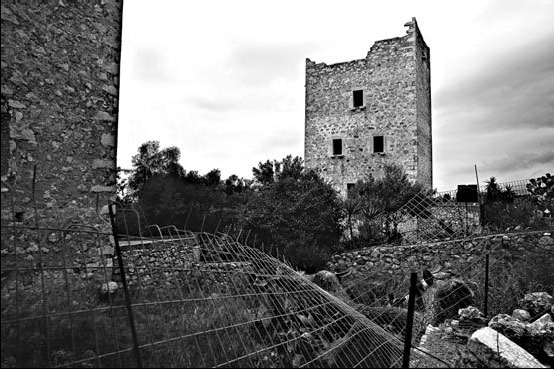
ATHENS - Not long ago Leonidas Hamodrakas, a lawyer in Athens, decided to pay closer attention to his family's land holdings - some fields, a scattering of buildings and a massive stone tower - in Mani, a rural region in southern Greece.
But property ownership in Greece is often less than clear cut. So Mr. Hamodrakas put a padlock on his gate and waited to see what would happen. Soon enough, he heard from neighbors. Three of them claimed that they, too, had title to parts of the property.
In this age of satellite imagery, digital records and the instantaneous exchange of information, most of Greece's land transaction records are still handwritten in ledgers, logged in by last names. No lot numbers. No clarity on boundaries or zoning. No obvious way to tell whether 2 people, or 10, have registered ownership of the same property.
As Greece tries to claw its way out of an economic crisis of historic proportions, one that has left 60 percent of young people without jobs, many experts cite the lack of a proper land registry as one of the biggest impediments to progress. It scares off foreign investors; makes it hard for the state to privatize its assets, as it has promised to do in exchange for bailout money; and makes it virtually impossible to collect property taxes.
Greece has thrown hundreds of millions of dollars at the problem over the past two decades, but has little to show for it. At one point, in the early 1990s, Greece took more than $100 million from the European Union to build a registry. But after seeing what was accomplished, the European Union demanded its money back.
Less than 7 percent of the country has been properly mapped, officials say. Experts say that even the Balkan states are far ahead of Greece when it comes to land registries attached to zoning maps - an approach developed by the Romans and used in much of the developed world since the 1800s.
The extent of disputed land is enormous, experts say. "If you calculated the total deeds that are registered," said Dimitris Kaloudiotis, an engineer who took over as president of the national land registry authority in April, "the country would be twice as big as it is."
In the countryside, deeds reflect another era. Boundaries can be the "three olive trees near the well" or the spot "where you can hear a donkey on the path."
"You had guys who had never been to school - who had 100 sheep - and they would throw a rock a certain distance and say: O.K., that's mine," said Mr. Hamodrakas, who in addition to his own problems has handled many landownership cases for clients.
His own dispute, he said, arises from the language related to a sale that took place long ago. "The papers say that my great-grandfather bought 'the threshing floor and the land around it.'" But did that mean 15 meters around the threshing floor or 1,500?
In general, experts say, Greeks are remarkably at ease with a level of irregularity when it comes to real estate. Stelios Patsoumas, an architect in Athens, says that most houses there run afoul of regulations. The building laws are so tangled, contradictory and outdated that it is virtually impossible to build without violating one regulation or another. Recently, for instance, he said he was asked to build a summer camp for children. The law demanded that the toilet facilities be 45 meters away from the sleeping quarters, a relic from the days of outhouses.
Most people involved in the real estate business say this state of affairs is rooted in the country's tangled history. Greece has weathered a long series of occupations and wars, as well as waves of emigration or migration within the country toward the cities. This means that land was widely abandoned, at least for a time. One of the problems in determining who owns what is that in many cases, use of the land for 20 years entitles one to ownership.
The goal now is to create a proper land registry by 2020, though officials call this optimistic. In the end, they said, Greece will spend about $1.5 billion on the effort.
The only parts of Greece that have had a land registry and zoning map are the Dodecanese Islands, because they were occupied by the Italians from 1912 to the end of World War II. Land use on the islands, which include Rhodes and Kos, is still guided by Italian law.
But there are problems even there. The zoning maps have never been updated. Lots include beachfront that has long since eroded and paths, once used by donkeys, that have long since disappeared. Nevertheless, residents say they are grateful.
"You have to understand," said Afroditi Billiri, a lawyer who works on Kos and handles many land issues. "This is cutting edge compared to the rest of Greece."
Dimitris Bounias contributed reporting.
The New York Times
(China Daily 06/09/2013 page10)