WORLD> Asia-Pacific

|
WORLD> Asia-Pacific
|
|
2004 Tsunami: Impact and Recovery
(wikipedia.org)
Updated: 2009-08-19 17:35
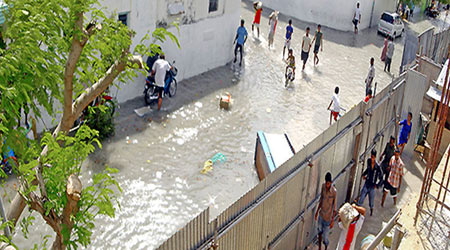
With concerns over global warming and the shrinking of the polar ice caps, the Maldives is directly threatened as it is a low-lying vulnerable developing country. The Maldives was devastated by the tremendously powerful tsunami in the Indian Ocean On December 26, 2004. The tsunami was a nation-wide disaster which caused severe damage to the physical infrastructure of many islands. The tsunami has set back the high levels of social progress and prosperity achieved in recent years. Total damages are estimated to be US$470 million, 62% of Gross Domestic Product (GDP). Of these losses, direct losses are US$298 million,or about 8% of the replacement cost of the national capital stock. Severe damage was caused to houses, tourist resorts, boats and other fishing equipment, schools, health facilities, transport and communication equipment, water and sanitation, and electricity infrastructure. There has also been substantial damage to agricultural crops and perennial trees. Farms, homestead plots, and aquifers have been salinized. The physical damage has led to severe human suffering in as much as large segments of the population have lost their dwellings, lifetime assets, savings, and sources of livelihood. About 7% of the population is now living in temporary shelters or with relatives. The total damage estimate of US$470 million does not, however, include a very real and critical cost that would demand additional financing, namely the cost of environmental damage and substantial soil erosion on many affected islands that to a great extent rely for their livelihoods on agriculture and home based market gardening; these costs could not yet be quantified as detailed surveys are still under way. The transmission of the physical damage into an economic shock occurred to a large extent via contraction of the tourism and fisheries sectors, which sustained the largest losses. Lost tourism and fisheries income will cause GDP growth, employment, and government revenues to contract this year. The revival of the Maldivian economy depends critically on how fast the two leading sectors, tourism and fisheries, recover. Public financing for the reconstruction of lost or damaged assets and infrastructure, and for providing temporary income support to the affected, will be critical. In terms of impacts on the Government's long-term development strategy, the tsunami has reinforced the established policy of encouraging voluntary population movements to less vulnerable islands, which has now assumed even greater urgency than in the past. This policy aims to mitigate the risks of future tsunamis and rising sea levels, help realize economies of scale in the provision of public and private services in the atolls, strengthen service quality in the atolls, improve welfare, and help retain the population in the atolls. The government has made a commendable effort to provide swift relief to the affected and is now engaged in planning and executing a reconstruction program. Reconstruction of public assets and restoring lost government revenue will require financing of US$364 million, most of which will need to come from external sources in grants and highly concessional loans. This document spells out in some detail the physical damage and human suffering caused by the tsunami, the recovery strategy, and financing needs. A set of accompanying annexes discuss impacts of the tsunamion individual sectors in greater detail. According to the Report of UN Coordination of Humanitarian Affairs, as of 9 January 2005, it is recorded that Maldives suffered enormous damage – 82 deaths, 14 of the islands became uninhabitable requiring its inhabitants to be permanently evacuated. Another 79 islands were left without safe drinking water. |