Comments
  Print
Print  Mail
Mail  Large Medium Small
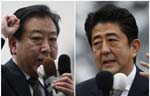
When Japanese Prime Minister Shinzo Abe asked to visit the United States in January soon after taking office in December, the White House declined the offer, citing US President Barack Obama's busy agenda with the inauguration and the State of the Union Address.
The trip laden with Abe's great expectations was finally scheduled for February after intense consultation.
But the painstakingly staged visit, which concluded on Sunday and was described by some Asian media as the Japanese leader's "pilgrimage" to the country that shelters Japan, proved disappointing.
Falling short of Abe's expectation of prodding the US into taking sides with Japan in its spiraling dispute with China over the Diaoyu Islands, where tension has risen since the Japanese government "nationalized" parts of the islands last year, Washington this time intentionally shunned the issue, refraining from clearly throwing its support behind Tokyo.
When Abe finally met with Obama at the Oval Office on Friday, he scarcely got the same high-profile reception as other heads of state who visited Washington.
Instead of holding a joint large-scale press conference after the talks with Obama on Friday, the US arranged only a short, scaled-down news briefing. And during the news briefing, Obama never once mentioned China or the tension over the Diaoyu Islands.
The timing did not appear good for Obama, given automatic budget cuts that take effect on March 1 in the US if Obama and Congress cannot reach a deal in the coming days.
While Obama vowed a strong response to the Democratic People's Republic of Korea's provocation of its third nuclear test, he has been careful not to send the wrong message to China.
After Abe took a question from a Japanese reporter about the Diaoyu Islands dispute, Obama did not want to touch on the issue and instead quickly signaled an end to the news briefing.
The US-Japan summit also featured by war of words between the Japanese government and the Washington Post as they were entangled in a dispute about the accuracy of an interview Abe gave the Post before his US tour.
The Post quoted him as saying that China had a "deeply ingrained" need to spar with Japan and other Asian neighbors over territory, remarks that soon drew a strong reaction from China — Foreign Ministry spokesman Hong Lei said they were "shocked" and that it is rare a leader would "brazenly distort facts" and ineffectively verbally attack its neighbor.
Japanese Chief Cabinet Secretary Yoshihide Suga said that Washington Post misquoted Abe's remark, which prompted the Post to publish the full transcript on the website.
According to Japan Daily Press, Suga said the Japanese government got in touch with China to clarify the statements.
Yet despite setbacks during his one-day visit to the US capital, Abe, the fifth Japanese prime minister since Obama became president in 2009, used the visit to fully demonstrate his ambitious political agenda.
During a speech titled "Japan Is Back" at the Center for Strategic and International Studies on Friday afternoon, Abe said the US-Japan bond, which has wavered in the past three years, is coming back.
Abe, whose first term ended abruptly in 2007, has vowed to revive Japan's economy with a mix of hyper-easy monetary policy and big spending. The hawkish leader is also boosting Japan's defense spending for the first time in 11 years.
"Japan is not, and will never be, a second-tier country," Abe said in his speech. "So today ... I make a pledge. I will bring back a strong Japan, strong enough to do even more good for the betterment of the world."
Abe's US visit was also watched by those who have always kept an eye on the Japanese leader's right-wing history.
Two days before his visit to Washington, two US lawmakers, Mike Honda and Steve Israel, warned Abe in a letter the grave implication on bilateral relations if he revises a 1993 Japanese government apology, issued by then-chief cabinet secretary Yohei Kono, to the 200,000 women from neighboring countries such as China and the Philippines, and the Korean Peninsula who were drafted into Japanese military brothels.
Abe, whose grandfather was a cabinet minister during WWII, expressed his disagreement with the apology while serving as prime minister in 2006 and 2007. He called for a revised apology after leaving office.
Honda, who spearheaded a 2007 US House of Representatives resolution that demanded an apology from Japan, said those aging women were "still waiting for an appropriate apology" from Japan.
Contact the writer at chenweihua@chinadailyusa.com
Copyright 1995 - 2010 . All rights reserved. The content (including but not limited to text, photo, multimedia information, etc) published in this site belongs to China Daily Information Co (CDIC). Without written authorization from CDIC, such content shall not be republished or used in any form. Note: Browsers with 1024*768 or higher resolution are suggested for this site.
License for publishing multimedia online 0108263 Registration Number: 20100000002731