High-speed rail link expands beyond borders
Comments Print Mail Large Medium Small
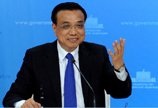
Premier Li Keqiang is playing the role of "high-speed train ambassador" again during his ongoing visits in Europe as leading officials from China, Hungary, Serbia and Macedonia agreed on Wednesday to build a land-sea express route by expanding the Budapest-Belgrade rail line to Skopje, Athens and the major container port of Piraeus in Greece. The agreement follows the China-Thailand high-speed railway cooperative program that Thailand has approved.
The country's cooperation with a number of countries s to build a high-speed rail network connecting it with Southeast Asia, Central Asia, Europe and some other parts of the world will help reshape China's economic landscape and boost the regional economy.
By the end of 2013, China had a high-speed train network of more than 10,000 kilometers, the world's largest, which connected many major cities making travel and freight transport much faster and more convenient. By the end of 2015, the mileage is expected to reach 19,000 km.
China's high-speed railway program is not confined to the country. It is now crossing borders, as Thailand has agreed to build a $12.2-billion railway line connecting the two countries. Aside from Thailand, China is planning to build a high-speed rail network through Central Asian countries such as Kazakhstan, Uzbekistan, Turkmenistan, and Middle East nations like Iran and Turkey up to Germany. In the north, Beijing is reportedly negotiating with Moscow to build a line stretching from Heilongjiang province to Russia's northern regions. As for the Thailand project, it is likely to be extended through Malaysia to reach Singapore. Besides, some African countries could get China's help to build more railways.
Such massive projects were unimaginable some years ago, when many doubted China's capability to build an extensive high-speed train network. The attention then was focused on the cost effectiveness and financial sustainability of the projects, because critics said it would be difficult for the operators to make profits. The corruption case against former railways minister Liu Zhijun and the tragic accident in Wenzhou in 2011 also cast dark shadows on the high-speed rail project.
But the operators of the landmark Beijing-Shanghai high-speed line have made a profit this year, just three years after the service started in the summer of 2011. With the safety of all the lines ensured, high-speed trains have been attracting an increasing number of passengers. Besides, Chinese high-speed railway companies have secured quite a few orders from abroad, signifying that the sector is stepping out of the woods.
Behind the sector's expansion is the country's strategy to exploit the highly technology- and capital-intensive industry to boost the country's of-late mediocre economic growth and increase its global influence.
Like the airplane industry, the high-speed train industry comprises several sectors and has a spillover effect on China's industrial upgrading and economic restructuring. But the importance of the high-speed rail network goes beyond that, for it will have a far-reaching impact on the economic development of the economically backward western part of the country. For example, it takes about five and half hours to travel from Beijing to Xi'an in Shaanxi province by a high-speed train, compared with more than 11 hours by normal-speed trains.
High-speed trains are bound to have a profound impact on China's economic landscape in the coming decades. Over the past 30 years, China has adopted a progressive development strategy, initially according priority to the eastern coastal region, partly because their proximity to the sea makes import of raw materials and export of finished products easier.
With the world's major economies, such as the United States, Europe and Japan, facing economic difficulties, China cannot sustain its export-oriented economic growth. It has to change its economic growth model. And while it focuses on boosting domestic consumption, and the use of advanced technologies coupled with innovation, to change the economic pattern, China also has concrete plans of developing its vast western region.
The idea of "western development" was put forward 14 years ago, but progress remains unsatisfactory, partly because of lack of infrastructure. The expansion of the high-speed rail network will provide the much-needed boost to the development plans for West China because it will connect the region not only with the developed eastern provinces, but also with the vast markets in Central Asia, Russia and Europe.
This will facilitate the extension of China's economic links with its northern and western neighbors and create an alternative regional market that can offset the impact of the recession or downturn in the big trading powers of America and Europe.
As the economic links among the countries in the region strengthen, the regional economy will consolidate and become more stable to the benefit of all the countries involved.
The author is a senior writer with China Daily. xinzhiming@chinadaily.com.cn

(China Daily 12/19/2014 page9)
Background