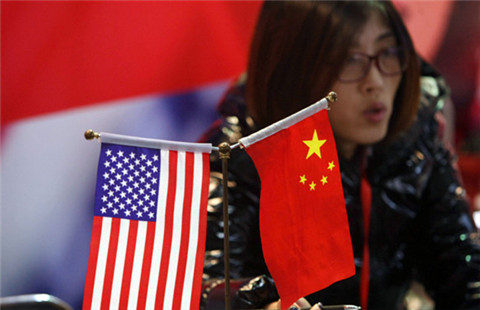
President Xi Jinping is visiting the United States, and articles and opinions about issues, conflicts and personal relationships have filled the American press. Today, Americans are obsessed with their country’s relationship with China and what it means to their futures.
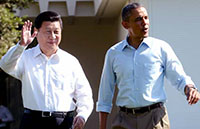
Absent in much of the coverage will be any historical view. At best, there might be references to Xi and Obama’s meeting at Sunnylands in Southern California two years ago. But Americans will learn little about the actual long history of the relations between the two countries. The close connection between China and America starts at the earliest beginnings of America.
There was China before there was an America, and it is because of China that America came to be. Christopher Columbus sailed west from Spain in search of a new route to China and Asia. He never found it, but he did “discover” America in 1492, and the world has never been the same since. Marco Polo’s fantastic account of China had inspired Columbus.
In the early 17th century, the first English colonists who settled in what would become Virginia were tasked to find a water route to the Pacific Ocean so that England could better engage in trade with China. Americans themselves understood their special connection with China. The tea at the famous Boston Tea Party that sparked the American war of independence was from China.
Indeed, the idea of “China” became a central ingredient in the developing identity of America itself. The lure of China was there in the American purchase of the Louisiana Territory; in the legendary Lewis and Clark Expedition; in the coveting of California and the Oregon Territory; in the waging of the Mexican-American War; in the purchase of Alaska; in the construction of the Transcontinental Railroad; and in the conquest of an insular empire in the Pacific, including in Hawaii and the Philippines. “Manifest Destiny” was to help make a closer China connection. Thousands of Americans went to China as missionaries, travelers, soldiers and entrepreneurs. Tens of thousands of Chinese came to America in search of work and fortune. Their labor was welcomed by some but feared by others. China was seen as the source of a “yellow peril” that threatened America. Today’s “China threat” is the current incarnation of that deep fear.
China and America had an especially intense relationship in the Cold War and even fought each other in Korea. America went to war in Vietnam in large part because of its fear of China. It was an unfounded fear and produced tragic consequences for millions of people.
In 1972, President Richard Nixon and Chairman Mao Zedong finally ended the confrontation and began a new era in relations. Deng Xiaoping confirmed that China would seek a constructive relationship on his historic visit in 1979. He was the first Chinese leader to visit Washington. His trip began regular visits of the top leaders of each country. Xi’s is the latest.
What is the significance of all this history? It is that our present has a long past. America and China have been linked for centuries. The connections are many and go beyond commercial interaction and geopolitics. They are also social and cultural. America and China, from a historical viewpoint, are closer than they have ever been in history, even during World War II when they were fighting as allies. Americans are learning Chinese in unprecedented numbers. Tens of thousands of young Chinese come to study in America.
Today, Americans and Chinese have much more than a common enemy as they did in the 1940s: they have a linked fate. Both have a deep and fundamental interest in forging a constructive, peaceful and mutually beneficial relationship. Problems and conflicts there are aplenty. But at stake are their destinies as great powers.
History cannot predict the future, but it can help us understand where we are: China and America are in the midst of constructing a long-term relationship of global significance. Neither is going away soon. Learning how to just get along will not be enough. They will have to find ways to go forward into the future together. The past requires that of them.
Gordon H. Chang is professor of American history, Olive H. Palmer Professor in Humanities, director of the Center for East Asian Studies at Stanford University, and author of Fateful Ties: A History of America's Preoccupation with China.
Related Stories
Copyright 1995 - . All rights reserved. The content (including but not limited to text, photo, multimedia information, etc) published in this site belongs to China Daily Information Co (CDIC). Without written authorization from CDIC, such content shall not be republished or used in any form. Note: Browsers with 1024*768 or higher resolution are suggested for this site.
License for publishing multimedia online 0108263 Registration Number: 130349